
Level 1 sweep and inspection to the NFPA 211 annual standard - flue, crown, cap, and flashing checked and photographed
Chimney sweep logs do not sweep chimneys. They loosen some creosote - which then falls where a brush and vacuum still have to collect it.
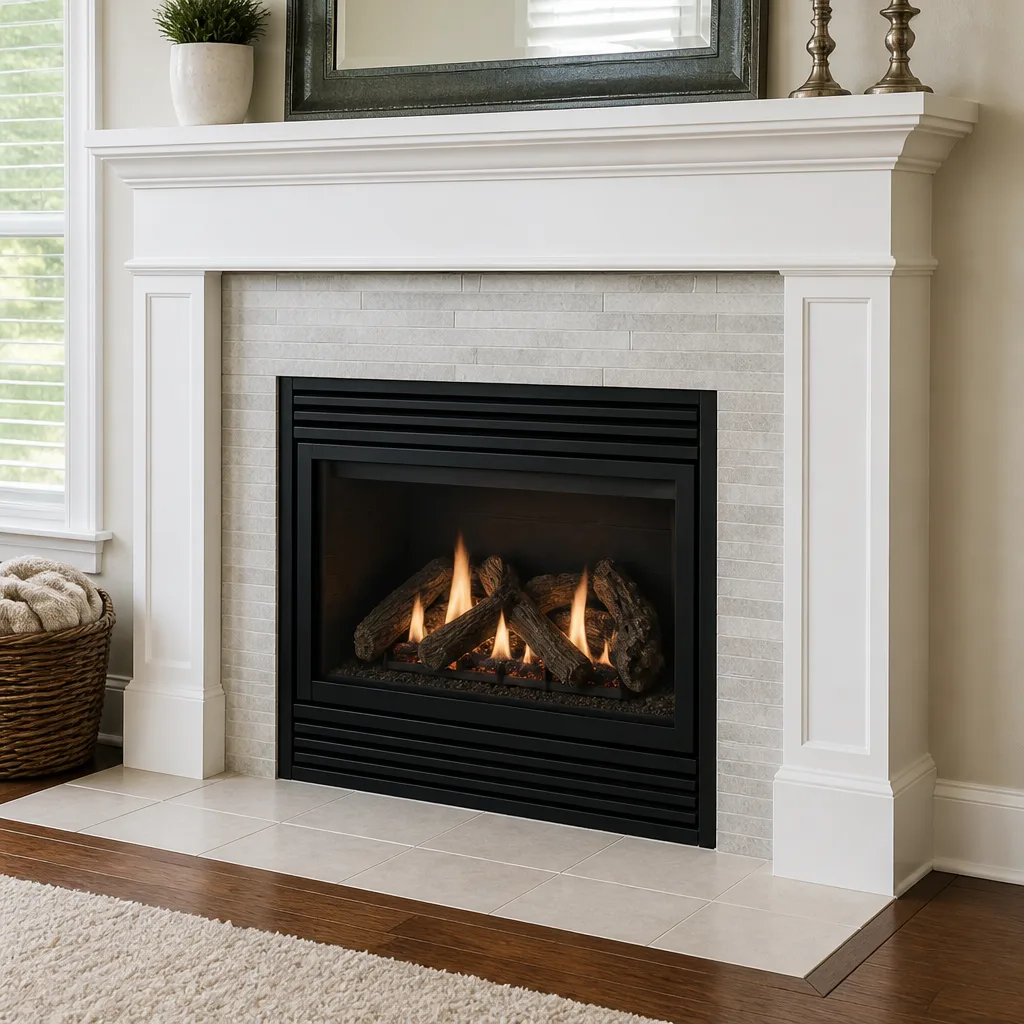
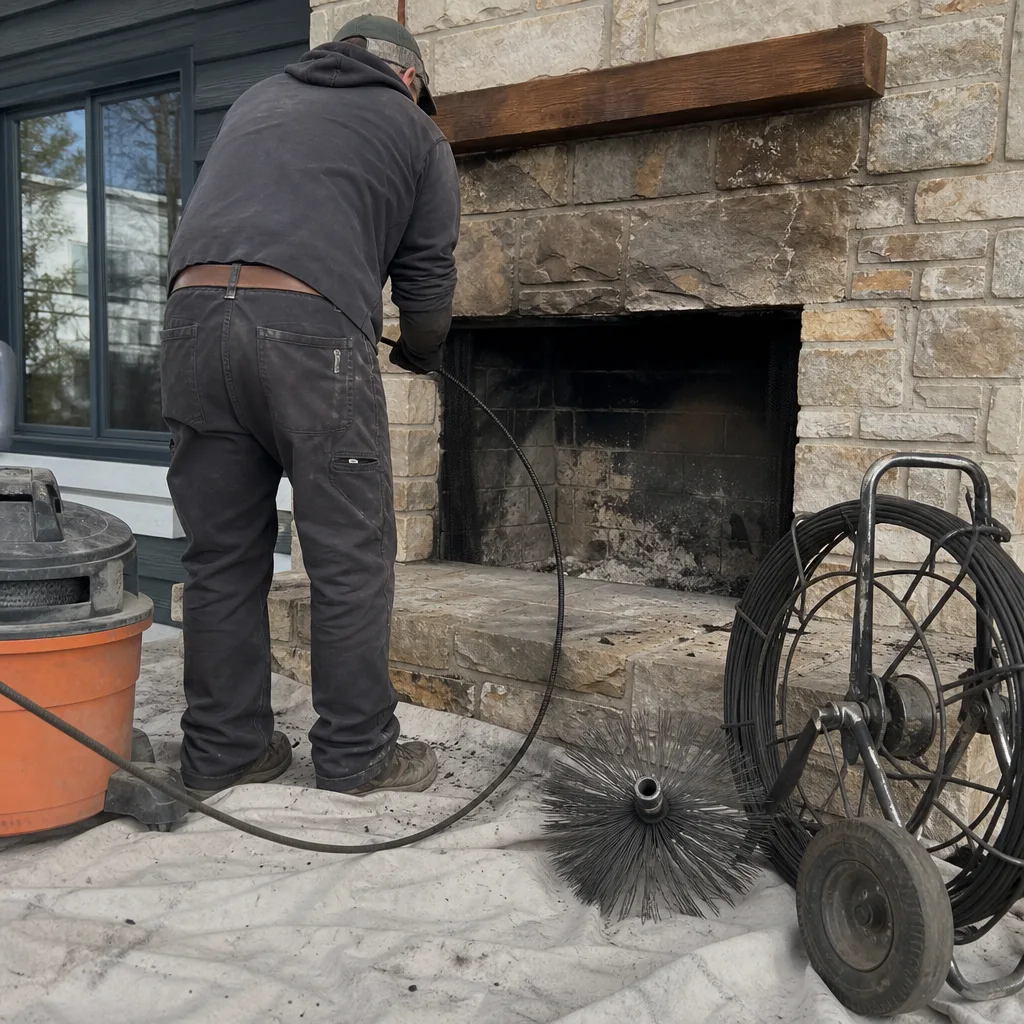 Before
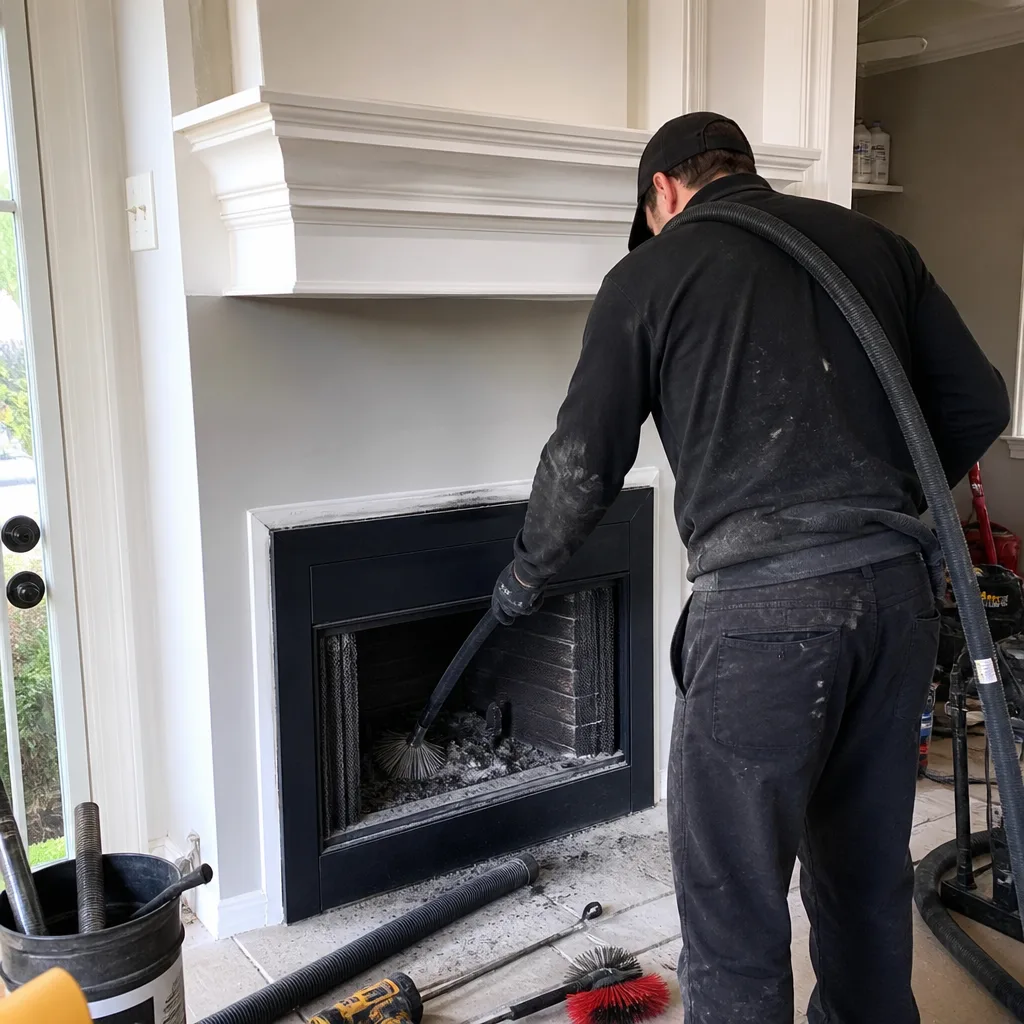 After
After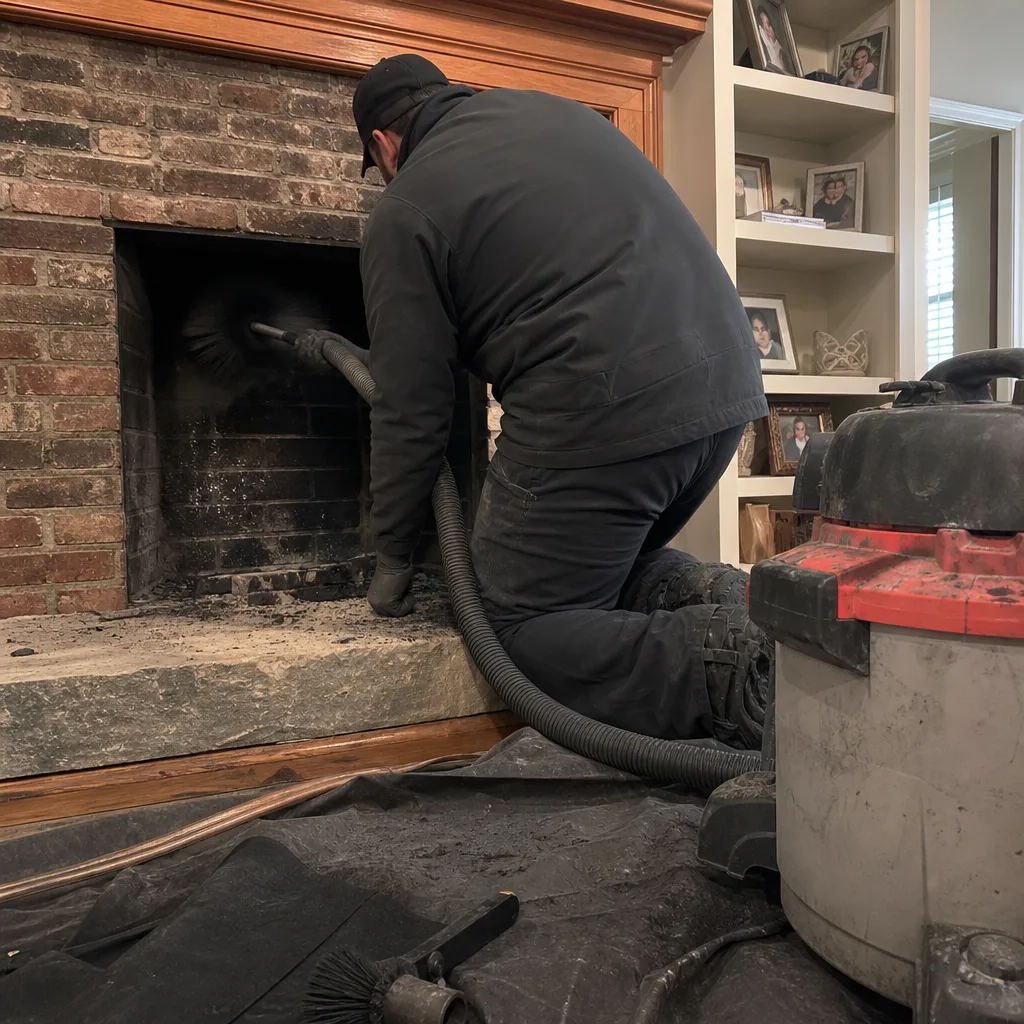 Before
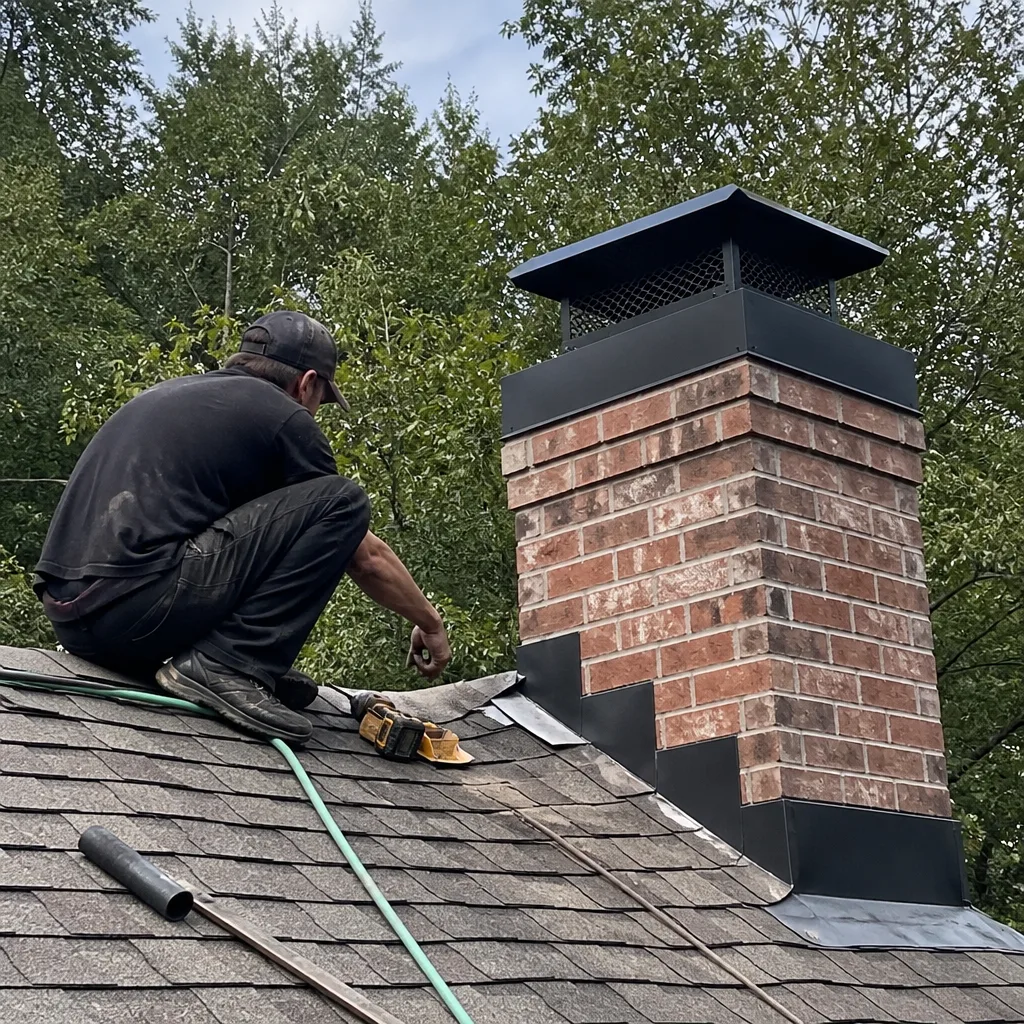 After
After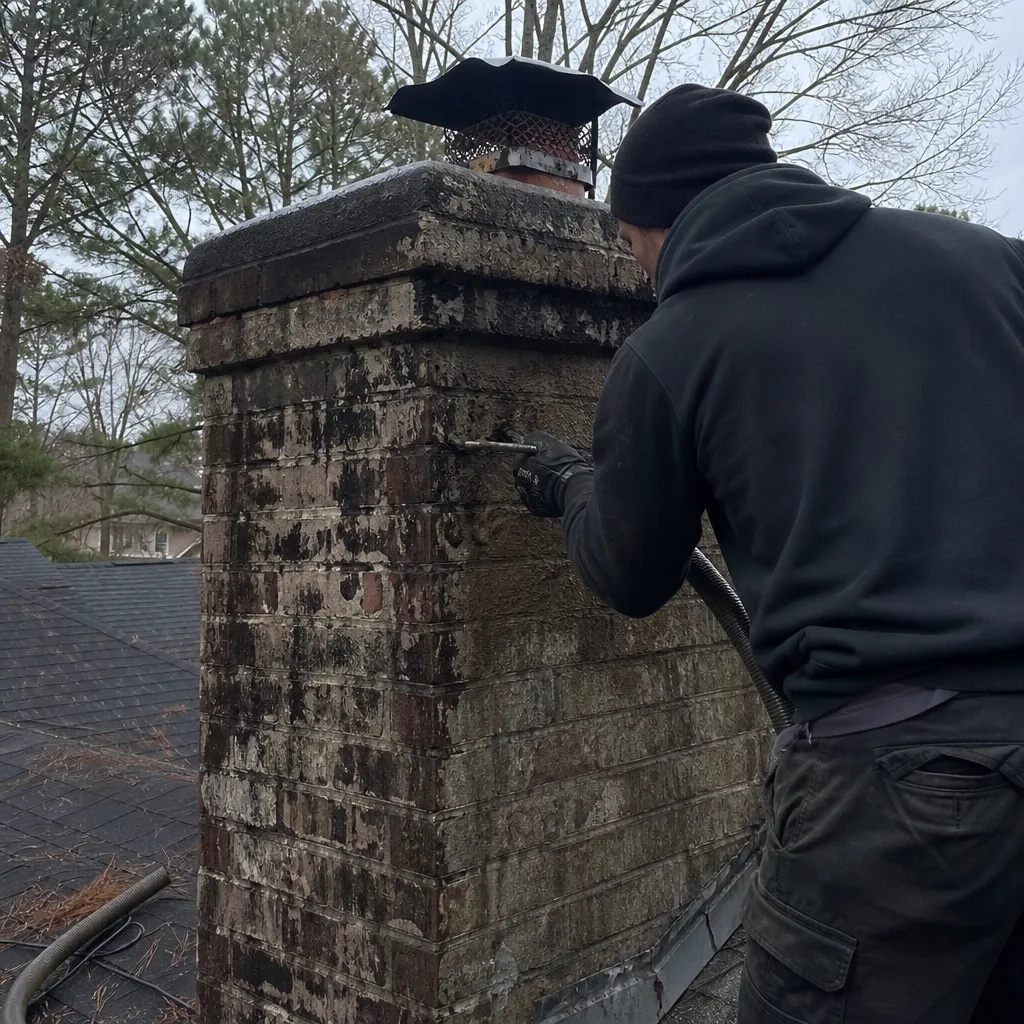 Before
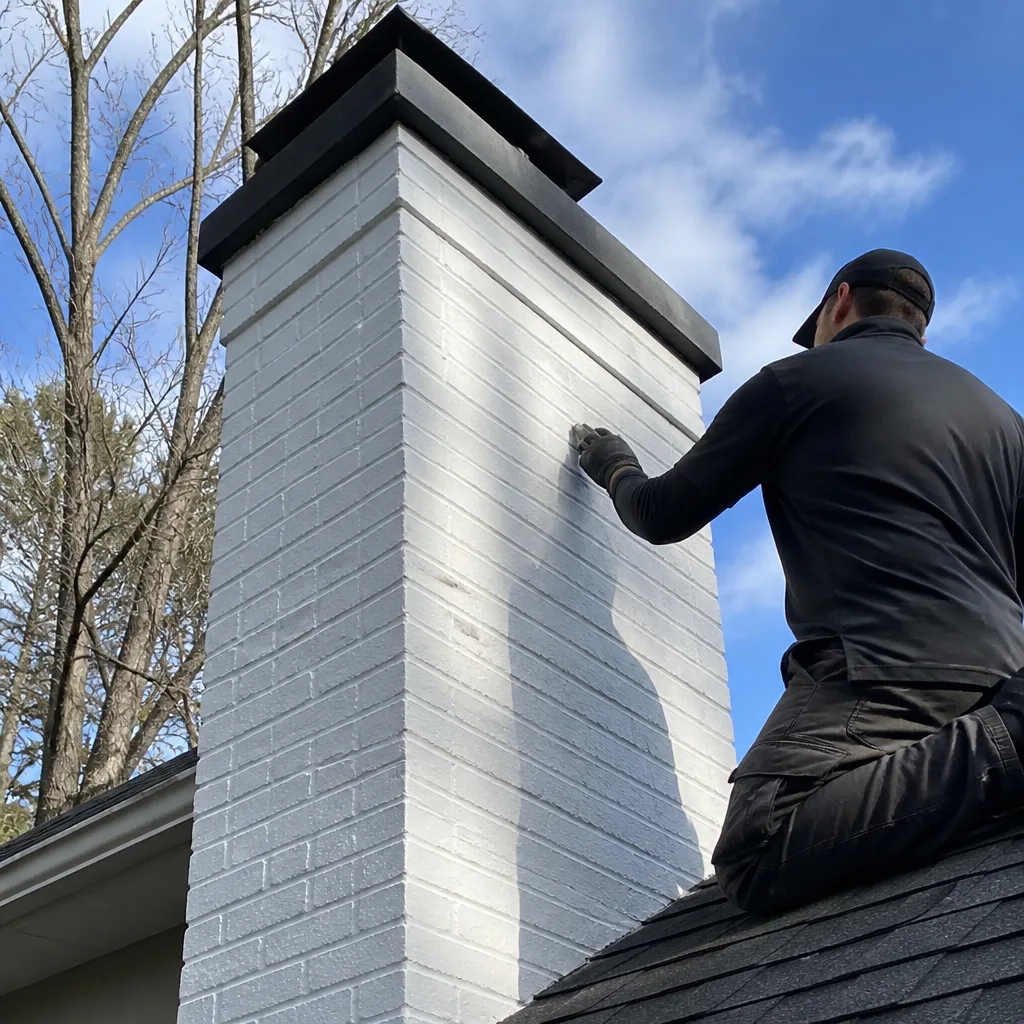 After
AfterHeatShield Chimney Cap Installation: The Atlanta Owner’s Guide
HeatShield chimney cap installation in Atlanta typically runs $340-$680 for a standard replacement, including the cap, collar, and labor on a single-flue masonry chimney. We stock HeatShield-compatible caps in common sizes and can usually schedule within 48 hours during the September-March burning season. Most Atlanta homeowners discover the problem after a heavy rain: water stains on the firebox floor, rust streaks down the exterior brick, or a cap that’s visibly tilted or missing after a windstorm off the Gulf.
Which HeatShield Models This Applies To
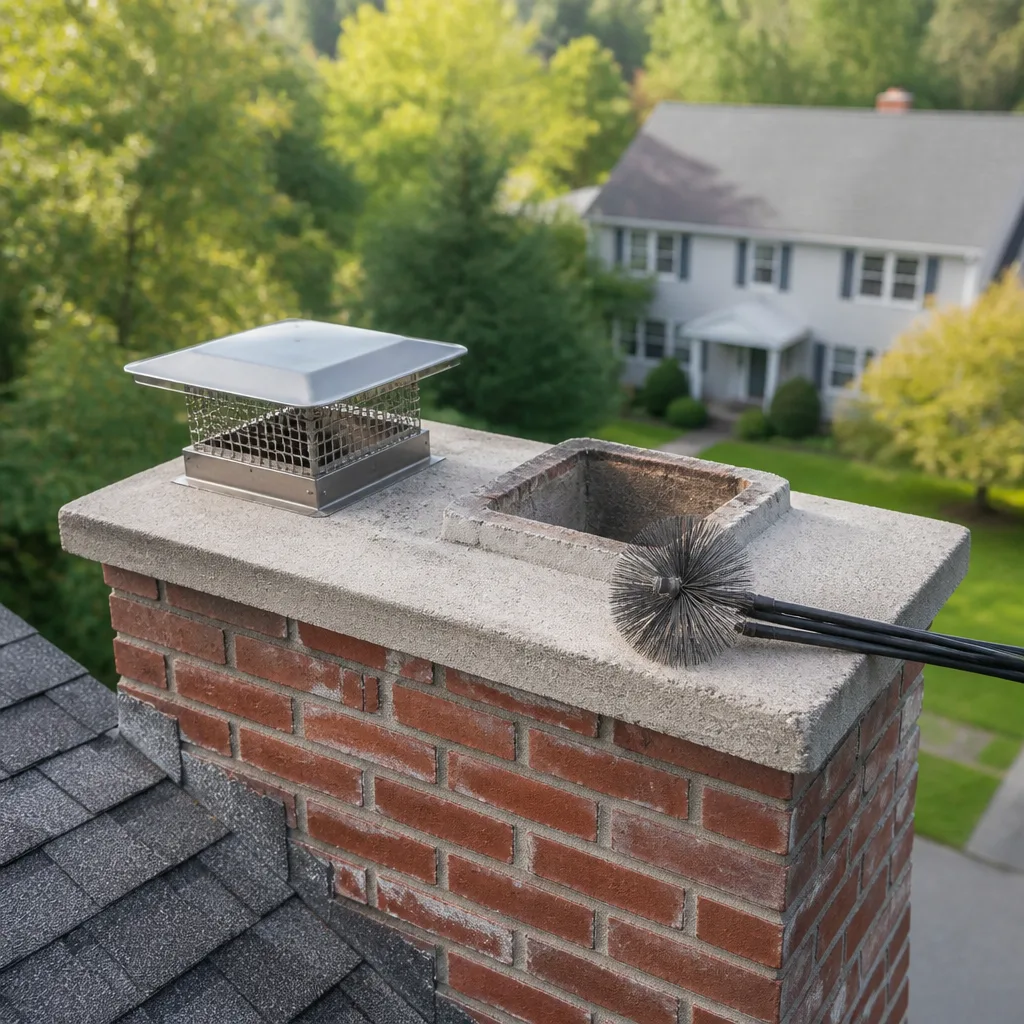
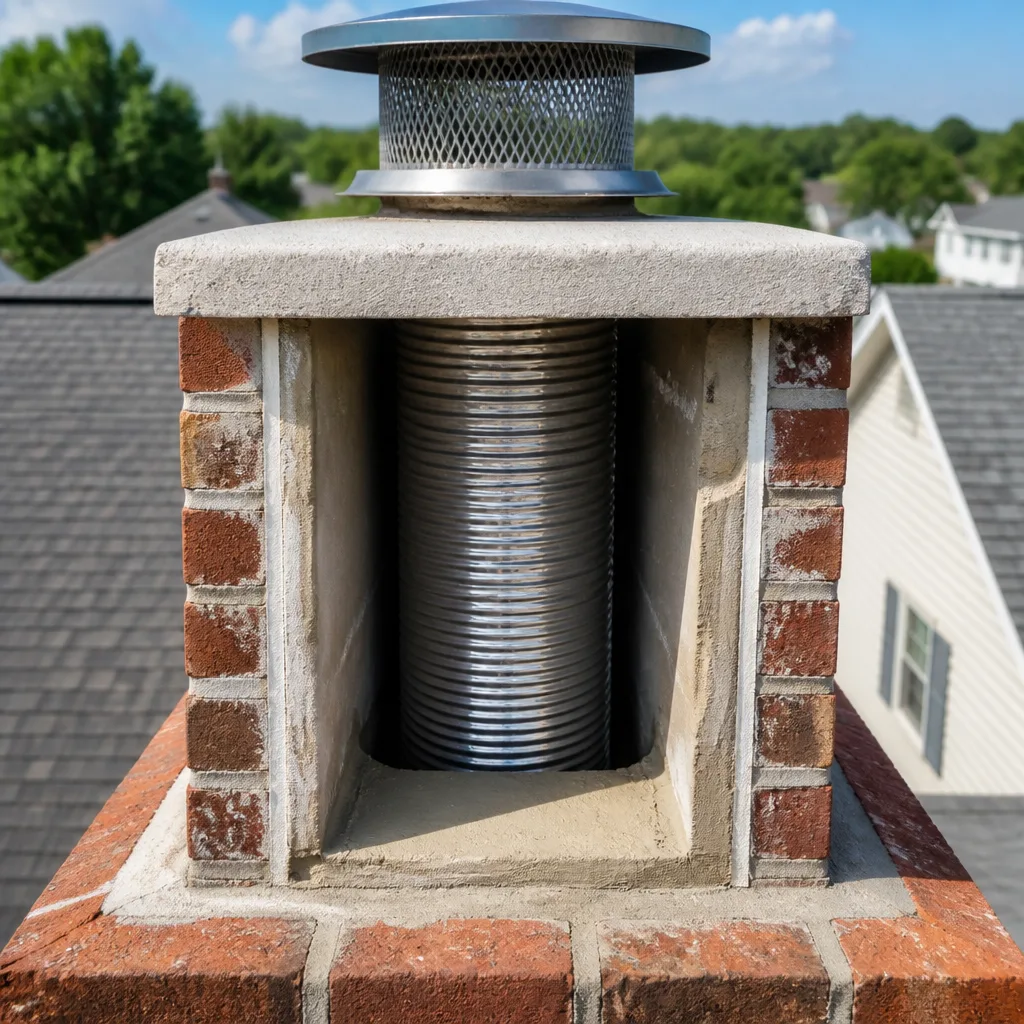
HeatShield caps aren’t sold as a standalone branded product line. The name refers to the ceramic resurfacing system (HeatShield Cerfractory Foam) used to restore deteriorated flue liners. When we say “HeatShield chimney cap installation,” we mean the cap that protects a flue that has been resurfaced with HeatShield or is scheduled for it. The cap must fit the resurfaced flue diameter, which is typically 1/8 to 3/16 inch larger than the original clay liner due to the ceramic coating buildup.
We match caps by three measurements: the flue tile’s outside diameter, the flue’s exposed height above the crown, and the crown’s flat surface width for base-mount models. For HeatShield-resurfaced flues in Atlanta’s 1920s-1950s housing stock, we most commonly see 8×8, 8×13, and 13×13 flue sizes. The critical gotcha: a standard 8-inch cap won’t seat properly on an 8-inch flue that now measures 8 3/16 inches after resurfacing. We carry expanded collars and custom-fit adapters from our Haven buying network, sourced through Olympia Chimney and Copperfield, to handle this without a second trip.
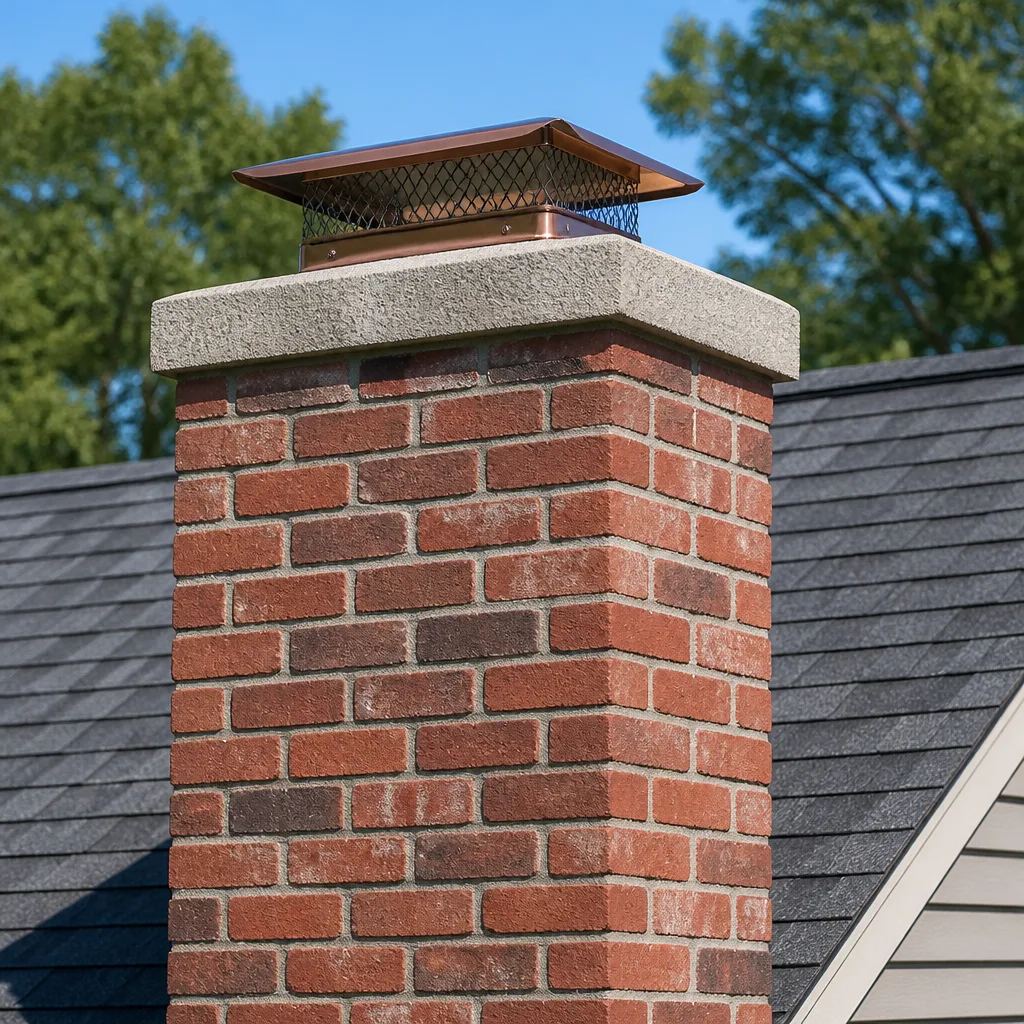
OEM-equivalent caps from Gelco and Famco match HeatShield’s stainless-steel spec (304 or 316 grade, 24-gauge minimum) and carry the same lifetime warranty against manufacture defect. We don’t upsell a “HeatShield-branded” cap because there isn’t one. What matters is the gauge, the mesh spark-arrestor size (5/8-inch for Georgia code compliance), and whether the collar fits your resurfaced flue.
Signs Your HeatShield Chimney Cap Installation Is Failing
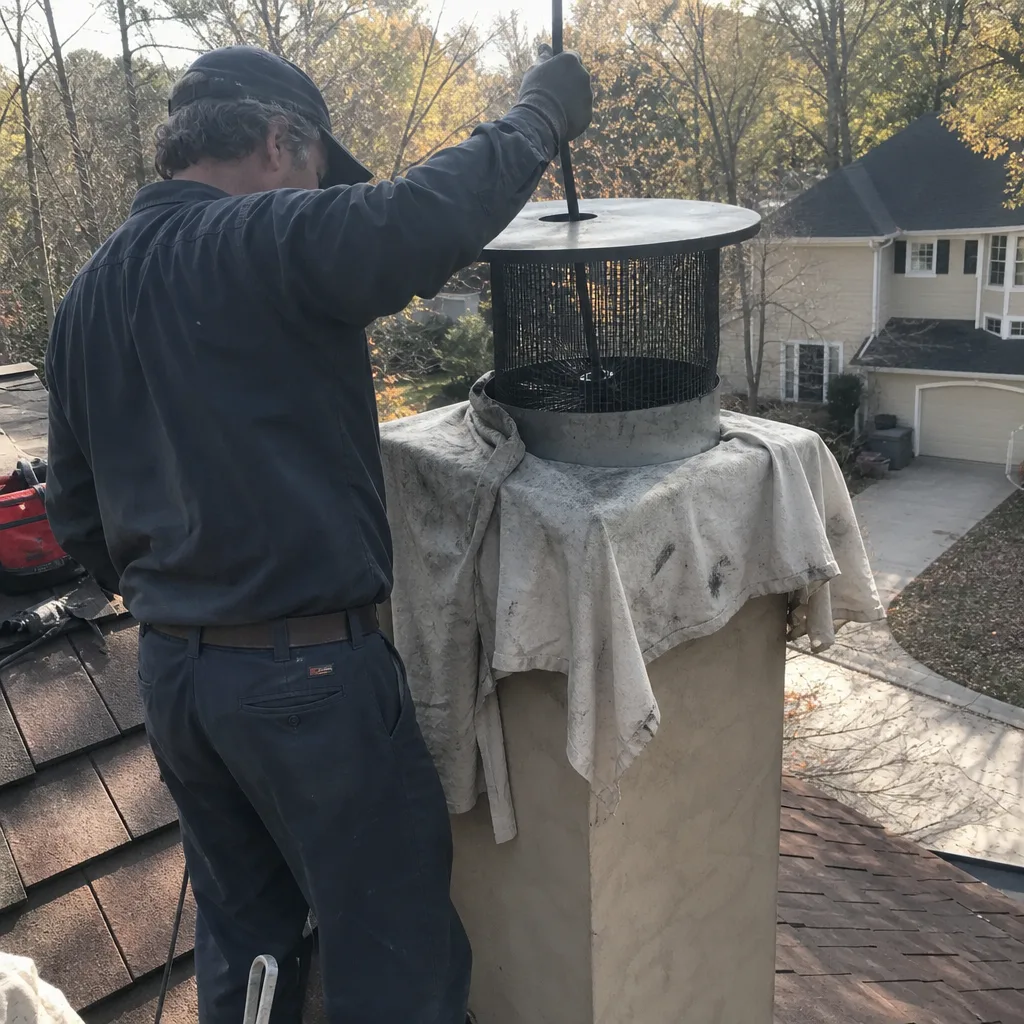
- Rust-colored water stains on the firebox floor or smoke chamber. The cap’s mesh screen or lid seam has corroded through, letting Atlanta’s driving rains run straight down the flue. In Buckhead and Virginia-Highland, we see this most often on caps installed before 2015, when 430-grade stainless was still common and couldn’t handle Georgia’s humidity cycles.
- The cap is visibly tilted, shifted, or missing after a storm. The tension-fit installation has lost its grip, usually because the flue tile lip has spalled or the original installer skipped the bead of high-temp sealant. Without that seal, a March windstorm off the Gulf can lift a loose cap in under 60 mph gusts.
- Birds, squirrels, or bats entering the flue. The mesh sides have separated from the frame or the lid gap has widened beyond 3/4 inch. Atlanta’s squirrel population is active year-round, and a missing or damaged cap is an open invitation that they’ll find within days.
- White efflorescence blooming on exterior brick below the crown. Water is entering at the cap-to-flue joint, running behind the brick face, and depositing salts as it evaporates. This means the cap is present but not sealing, which is worse than no cap at all because it traps moisture against the flue liner.
- Smoke backup or downdraft on mild, humid days. The cap’s lid has deformed from heat cycling, sitting too low over the flue opening and restricting draw. We measure this with a draft gauge: a properly capped flue should pull -0.02 to -0.04 inches of water column with a cold stack; a deformed lid drops that to zero or positive pressure.
BeforeAfterReplacement Cost & What’s Included
Here’s what we charge for HeatShield chimney cap installation in the Atlanta market:
| Service | Price Range |
|---|---|
| Standard single-flue stainless cap (304 grade, with mesh) | $180-$280 |
| Expanded collar or adapter for HeatShield-resurfaced flue | $45-$85 |
| Labor: removal, fitment, sealant, and draft test | $115-$315 |
| Typical total installed | $340-$680 |
The range depends on three things: flue accessibility (steep roof pitch adds time), whether we need to fabricate a custom collar for an oversized resurfaced flue, and if the crown itself needs resealing before the new cap goes on. We don’t discover these surprises after we start. Our tech runs the camera first, measures with a digital caliper, and delivers a written price with scope before any work begins. That’s Haven Standard Clause 1: have it in writing.
Every cap we install carries a 365-Day Done Right Promise. The manufacturer’s warranty covers manufacture defect for life; our labor covers proper fit and seal for one full year. You’ll walk away with photos of the installed cap, a draft reading, and a dated warranty card.
DIY or Call Us?
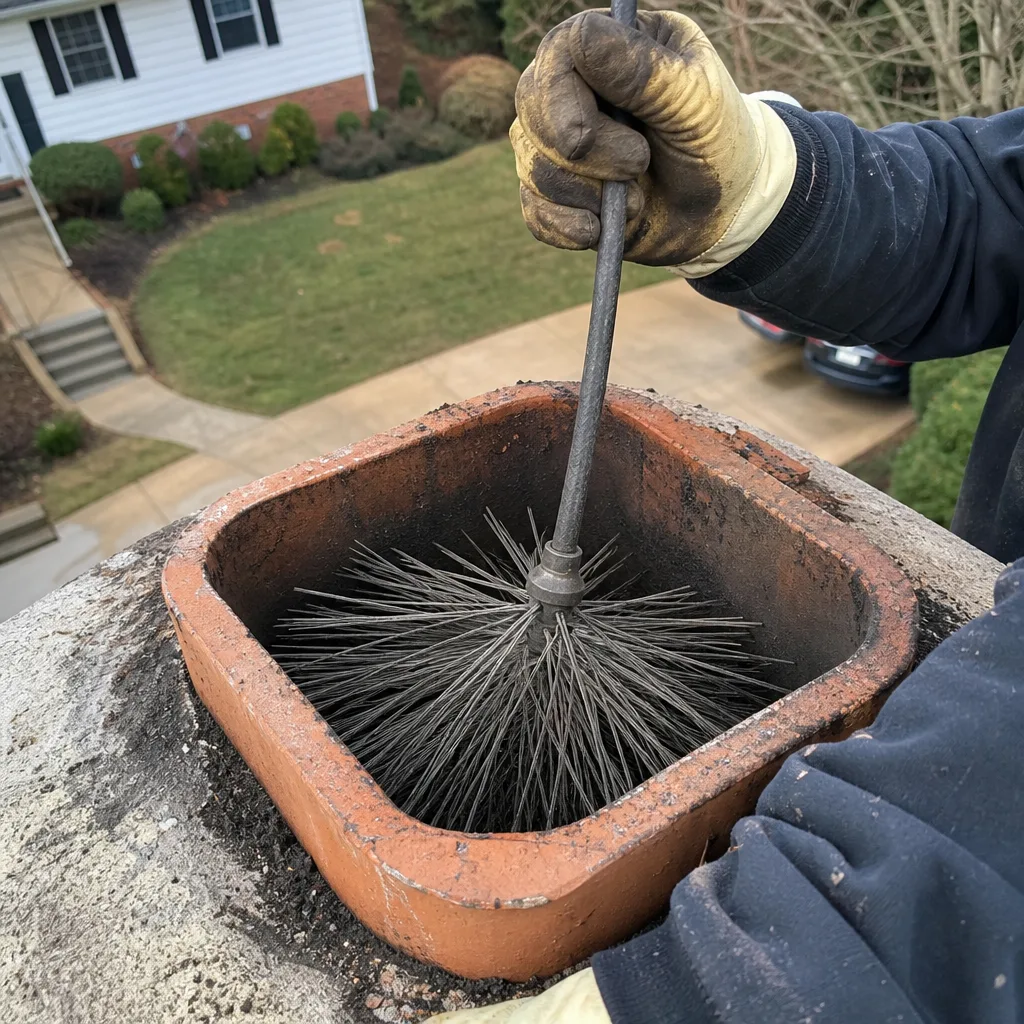
Here’s where an owner can safely look and where it ends.
You can check: whether the cap is present and seated level, whether mesh sides are intact, and whether water stains appear after rain. Use binoculars from the ground. Don’t climb.
What goes wrong with DIY: HeatShield-resurfaced flues have a ceramic coating that chips if the cap collar is forced or hammered. A misfit collar creates a gap that funnels water directly onto the resurfaced liner, voiding the HeatShield warranty. And any work above 15 feet on a pitched roof in Georgia humidity is a fall risk we won’t downplay. We’ve reinstalled three homeowner attempts this year alone, two of which cracked the flue lip.
We carry adapters, sealants, and caps sized for HeatShield-resurfaced flues on every truck. Call (470) 435-7984 and we’ll schedule a camera inspection, deliver a written price, and handle the fitment without a second trip.
FAQs
A 304-grade stainless cap typically lasts 15-20 years in Georgia’s climate; 316-grade extends that to 25+ years if the mesh is cleared annually. The limiting factor isn’t the metal, it’s the freeze-thaw cycling on the sealant bead and the pollen-and-humidity buildup that accelerates corrosion in the mesh corners. We inspect cap condition as part of every Level 2 sweep. Call (470) 435-7984 for an exact condition check - estimates are free.
Mesh can be spot-welded and minor lid dents can be hammered out, but we rarely recommend it. A repaired cap carries no warranty, and the labor cost approaches replacement. If the collar is cracked or the base ring is rusted through, replacement is the only sound option. We show you the camera footage and price both paths before you decide. Call (470) 435-7984 for a written comparison.
Most HeatShield chimney cap installations take 45 to 90 minutes from ladder set to draft test, assuming standard accessibility and no crown repair needed. Custom collars add 30 minutes for on-site fabrication. We book a two-hour window so we’re never rushing the sealant cure or the draft verification. Call (470) 435-7984 to check next available slots.
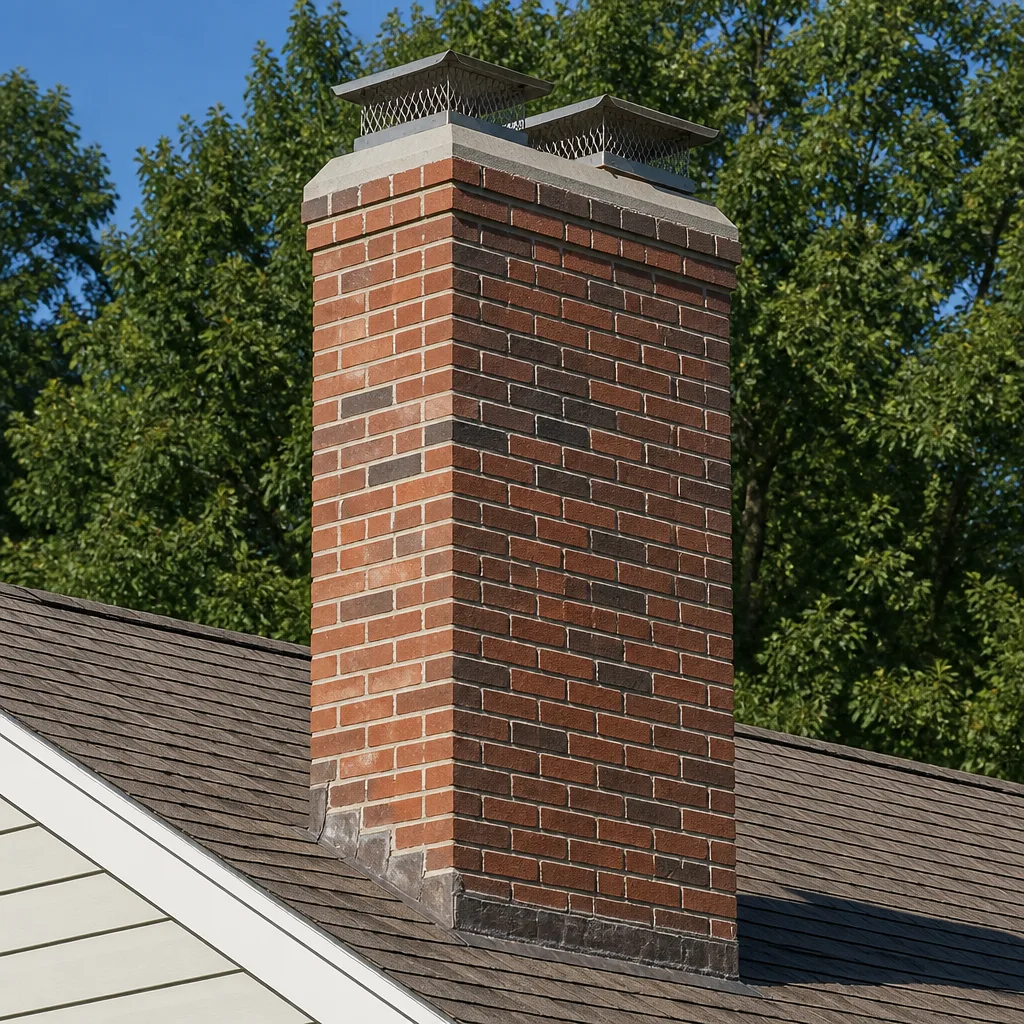
We stock 304 and 316 stainless caps in 8×8, 8×13, 13×13, and round 6-, 8-, and 10-inch diameters, plus expanded collars for HeatShield-resurfaced flues. For odd sizes or multi-flue configurations, we fabricate within 24 hours through our Haven buying network. The camera doesn’t negotiate - it just shows you what’s there, and we match the part to what we measured. Call (470) 435-7984 to confirm fitment for your flue.
Written by Corrine Halstead, Owner, Level Two Chimney Atlanta at Level Two Chimney Atlanta, serving Atlanta and nearby areas.