
Level 1 sweep and inspection to the NFPA 211 annual standard - flue, crown, cap, and flashing checked and photographed
Chimney sweep logs do not sweep chimneys. They loosen some creosote - which then falls where a brush and vacuum still have to collect it.
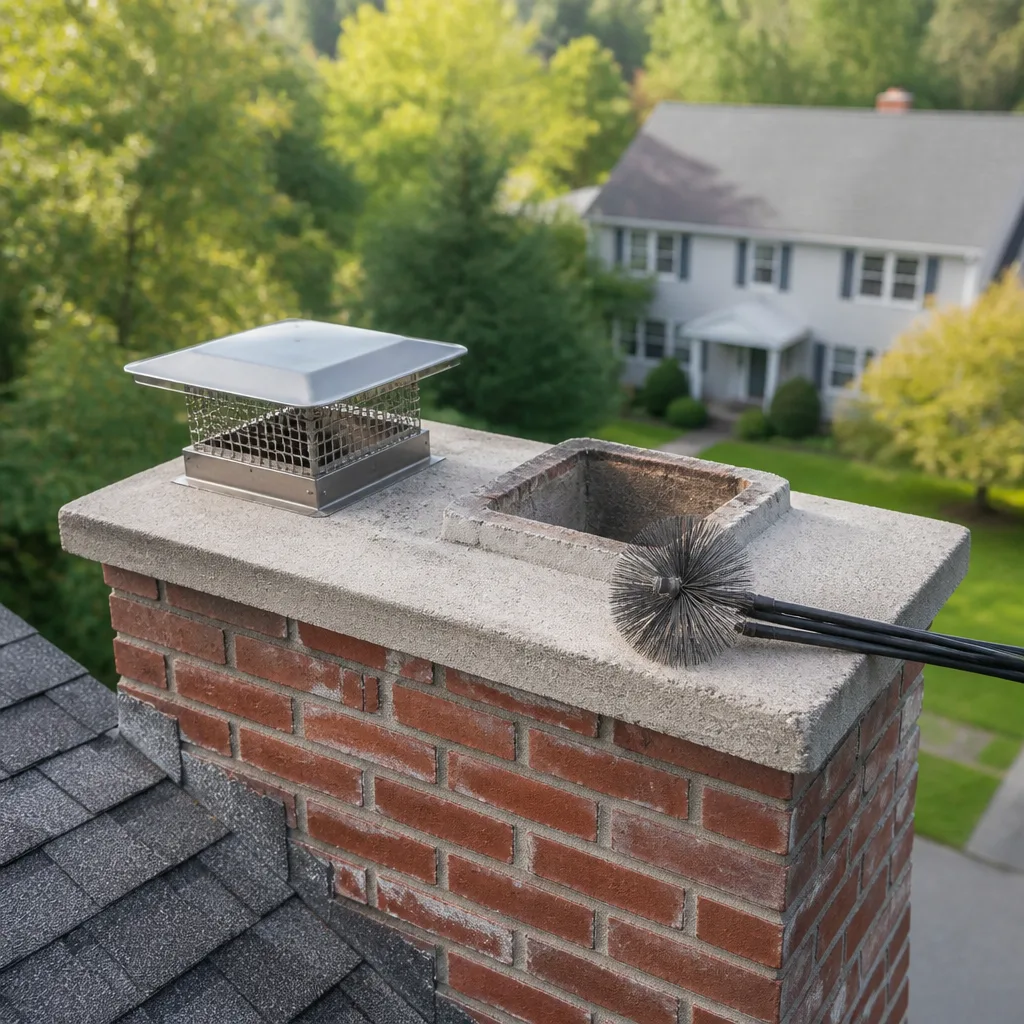
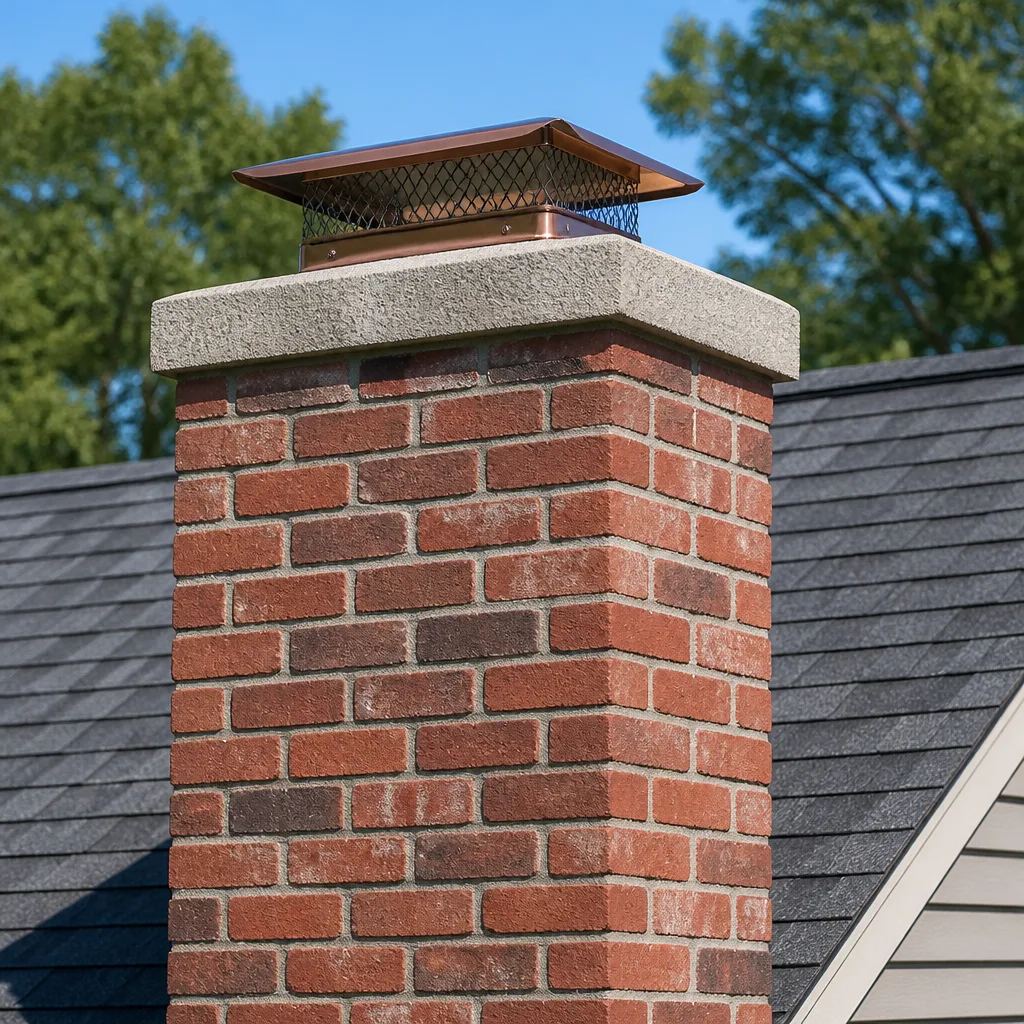
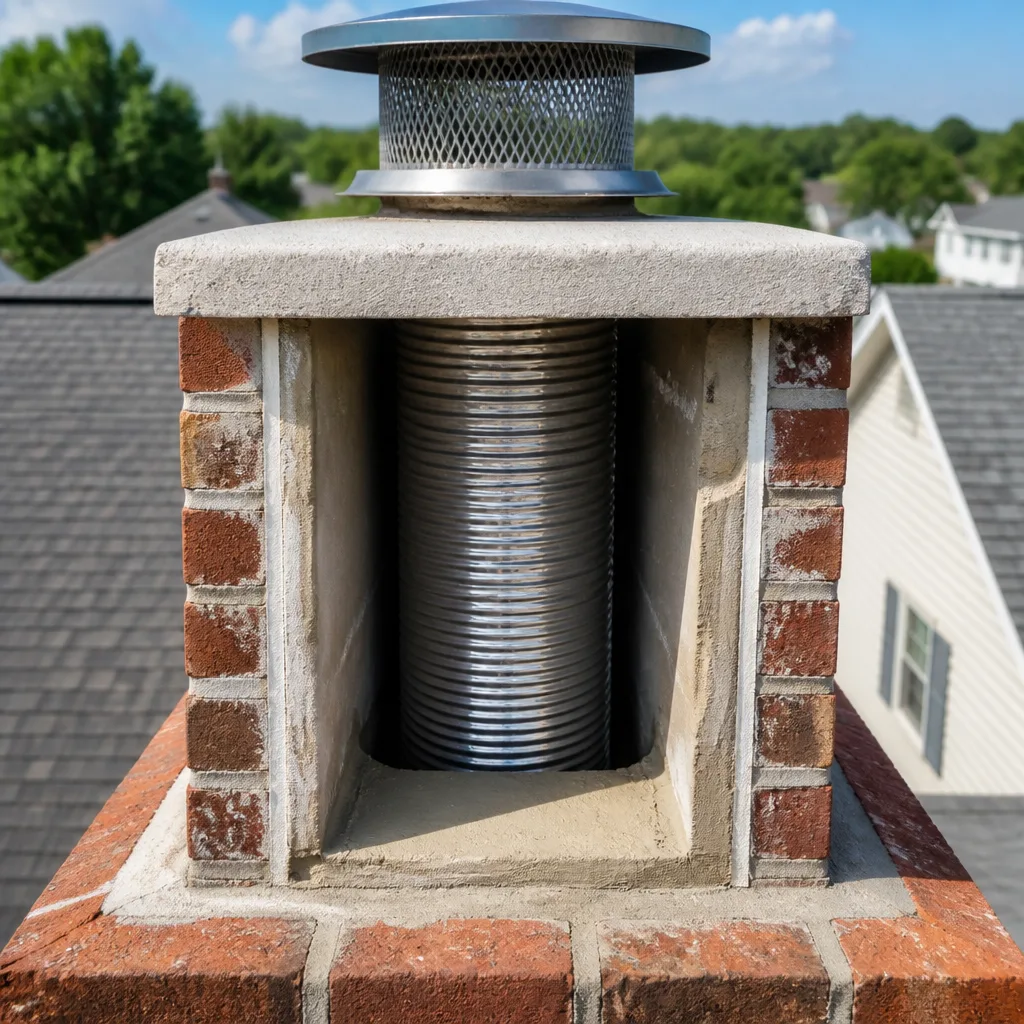
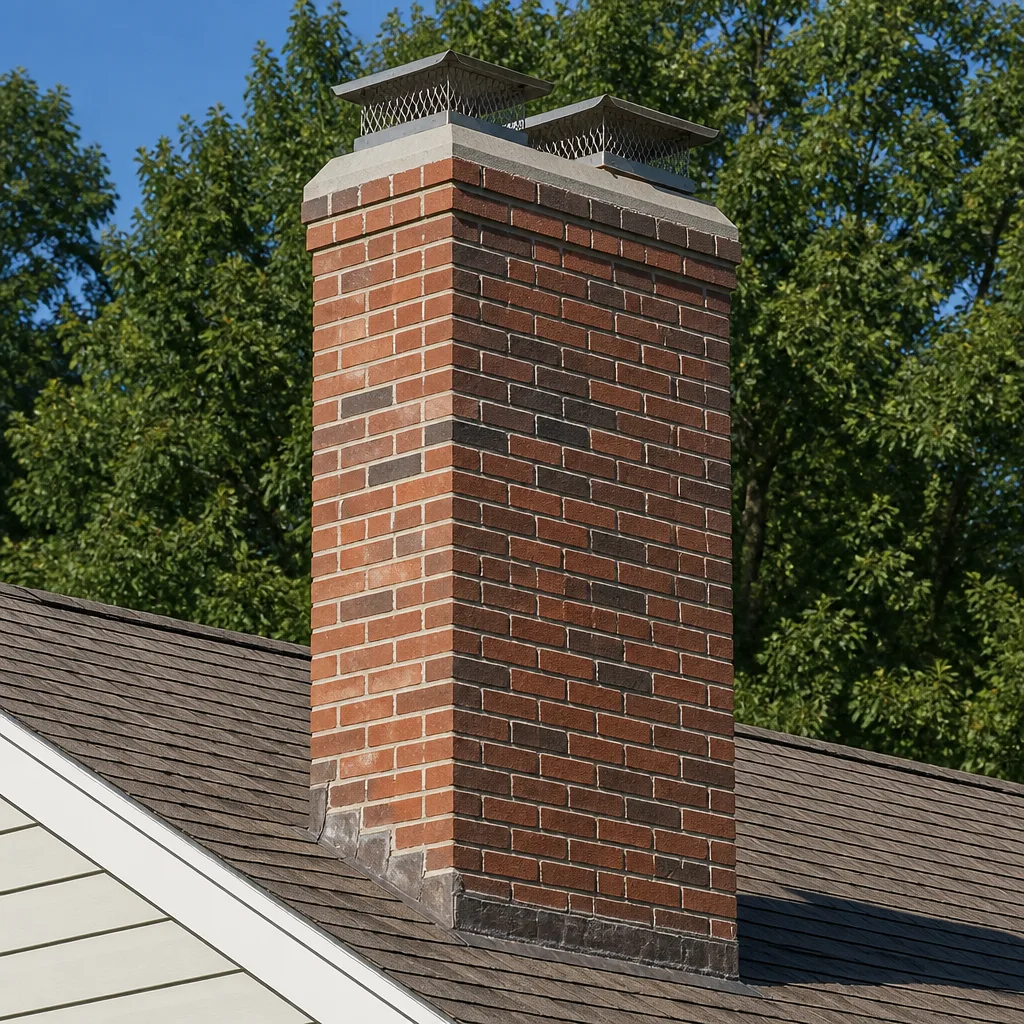
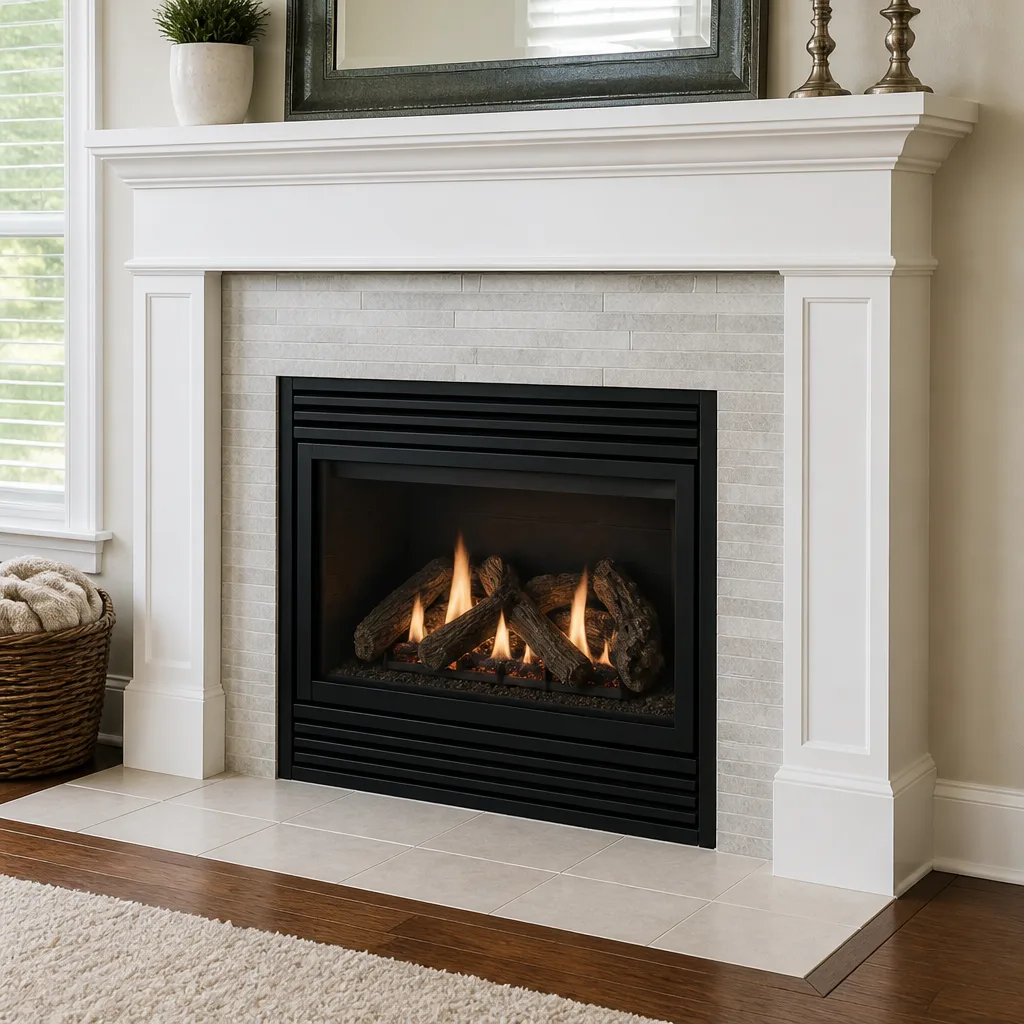
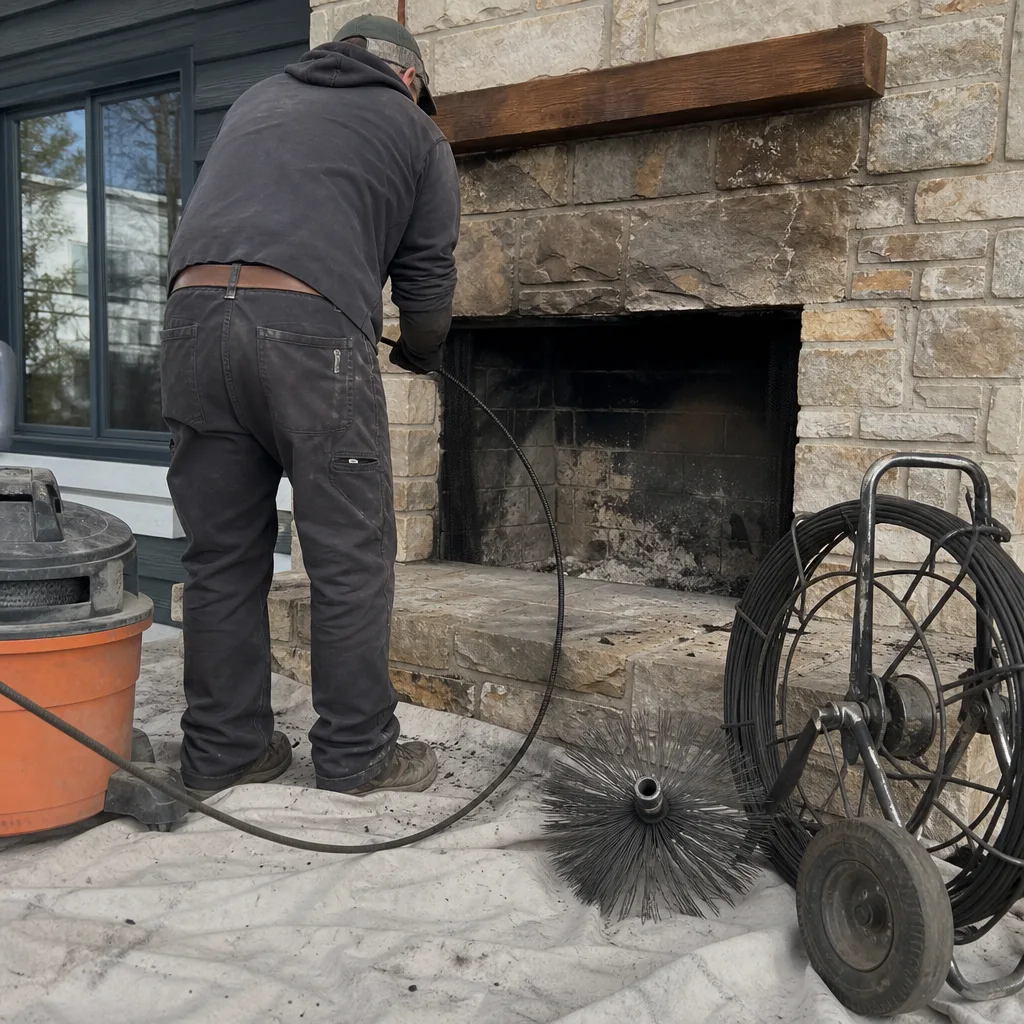 Before
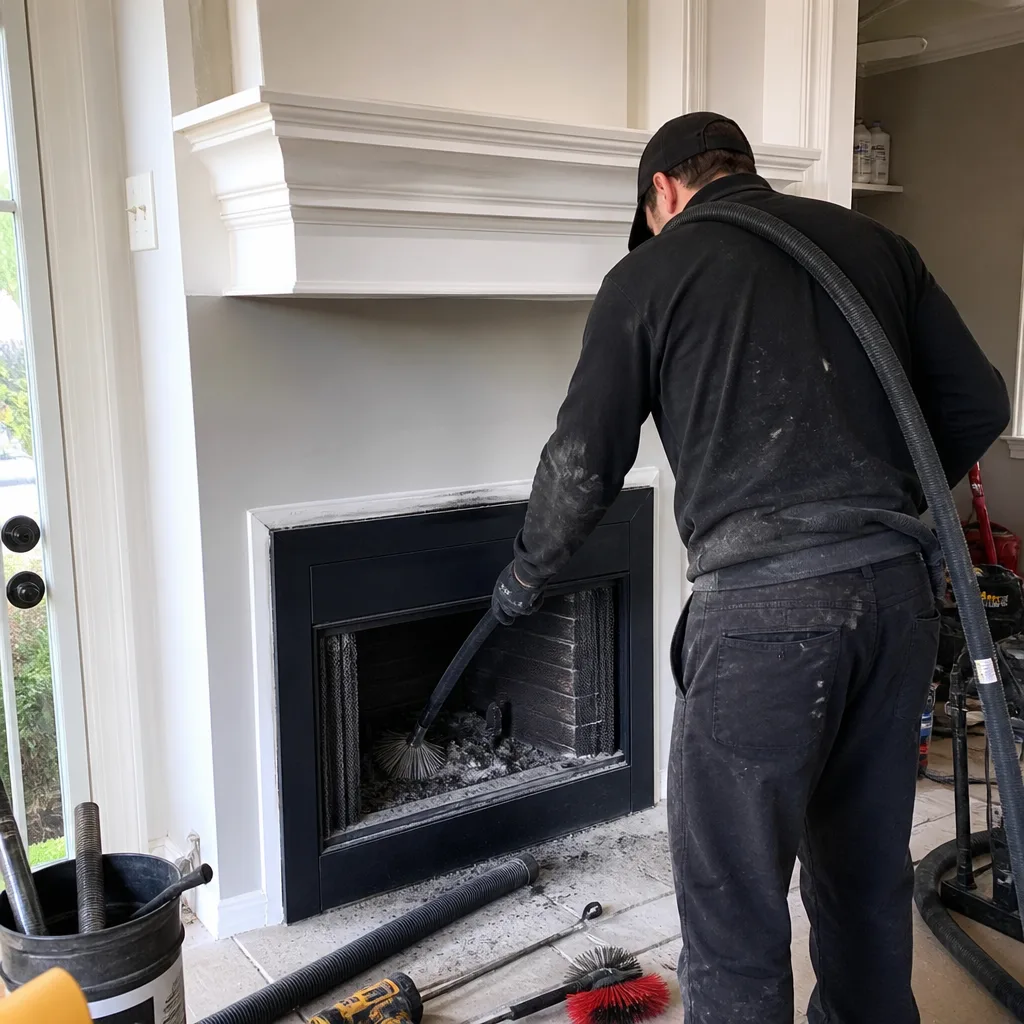 After
After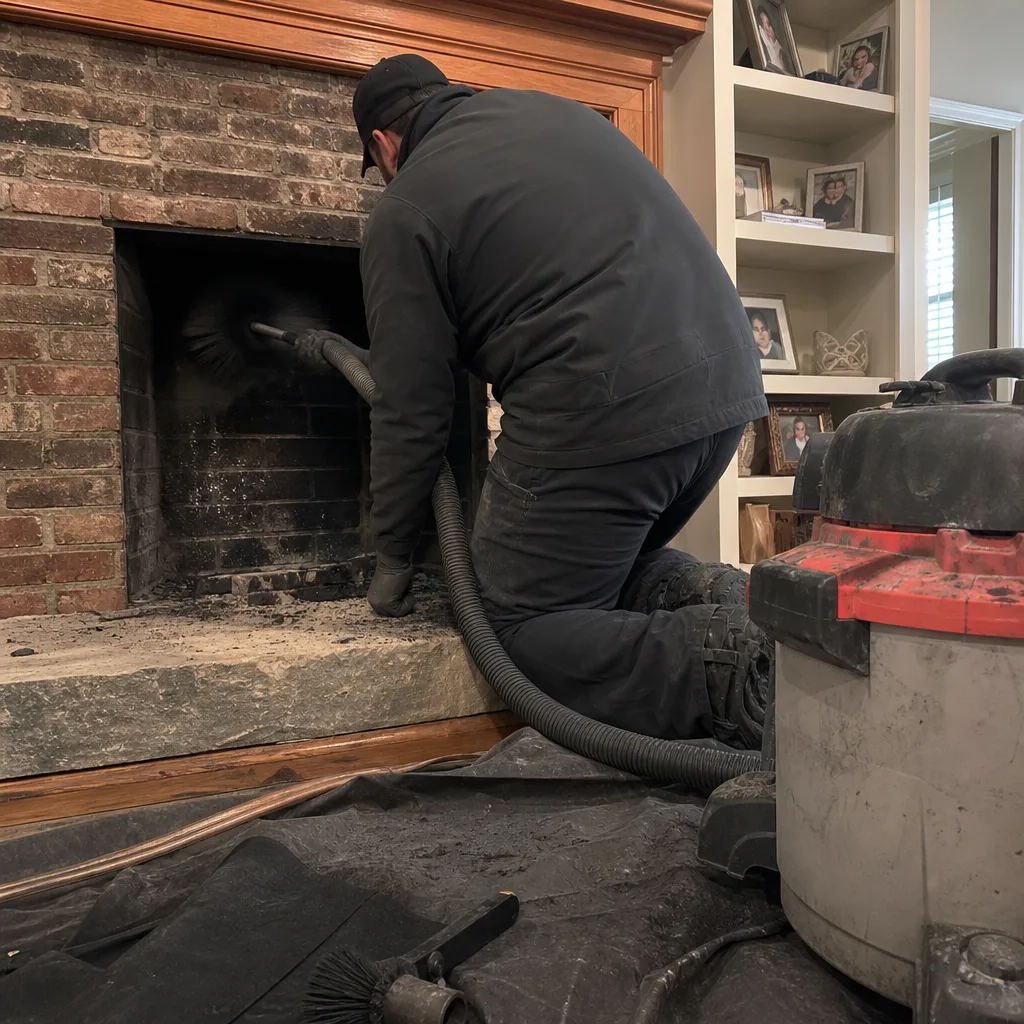 Before
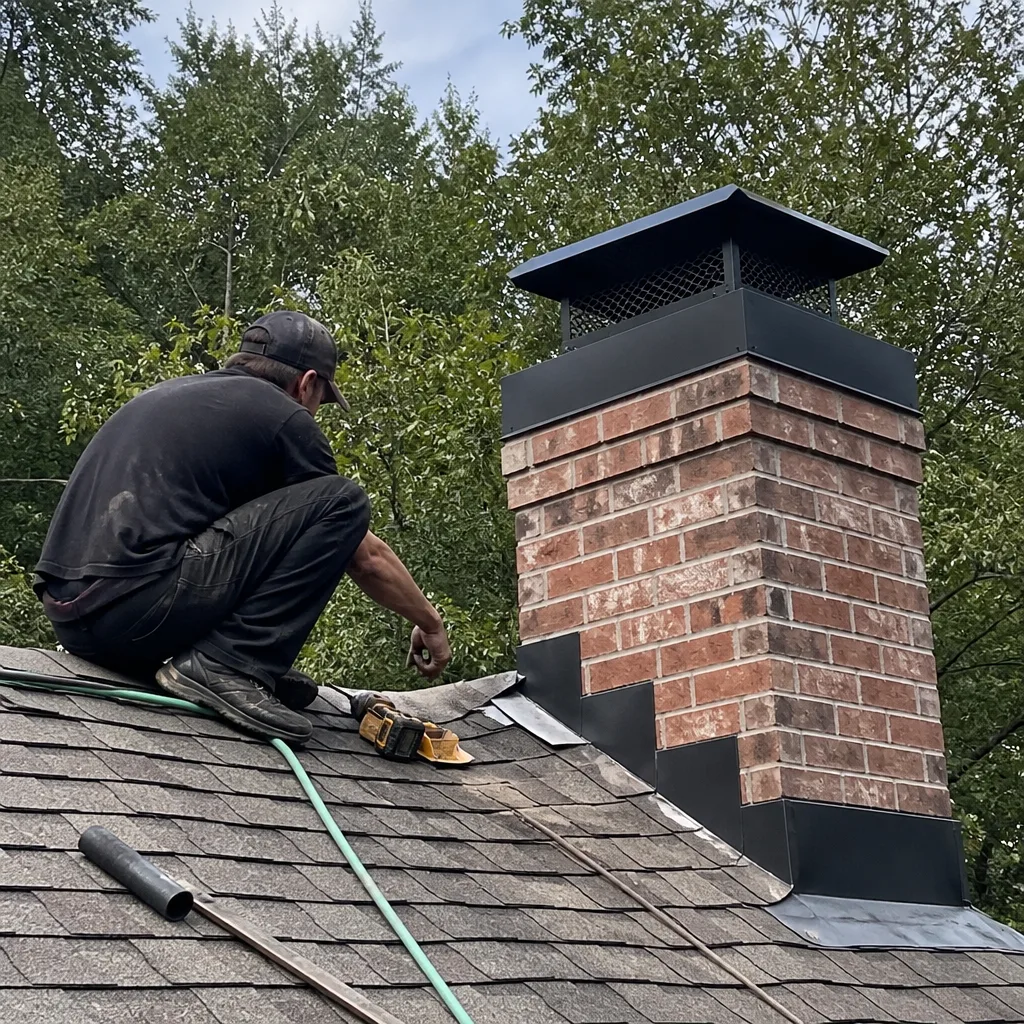 After
After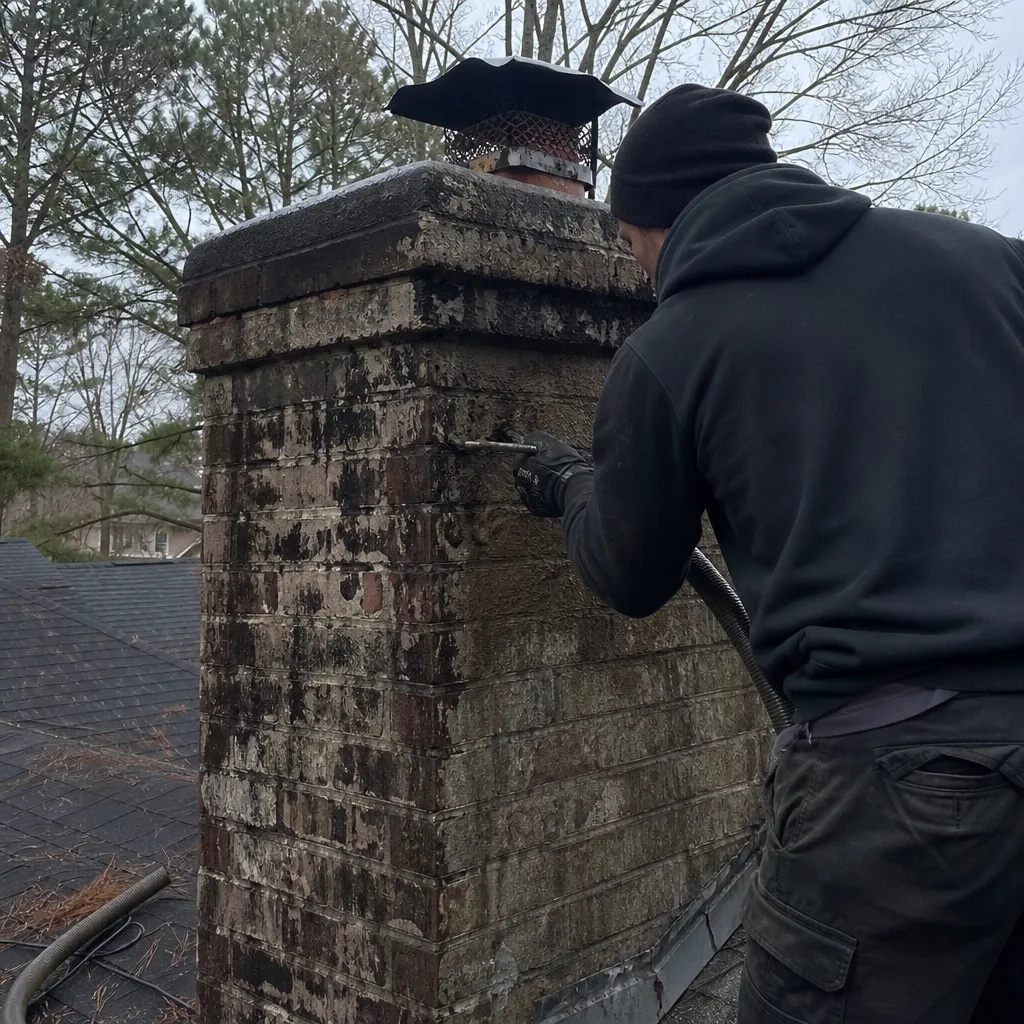 Before
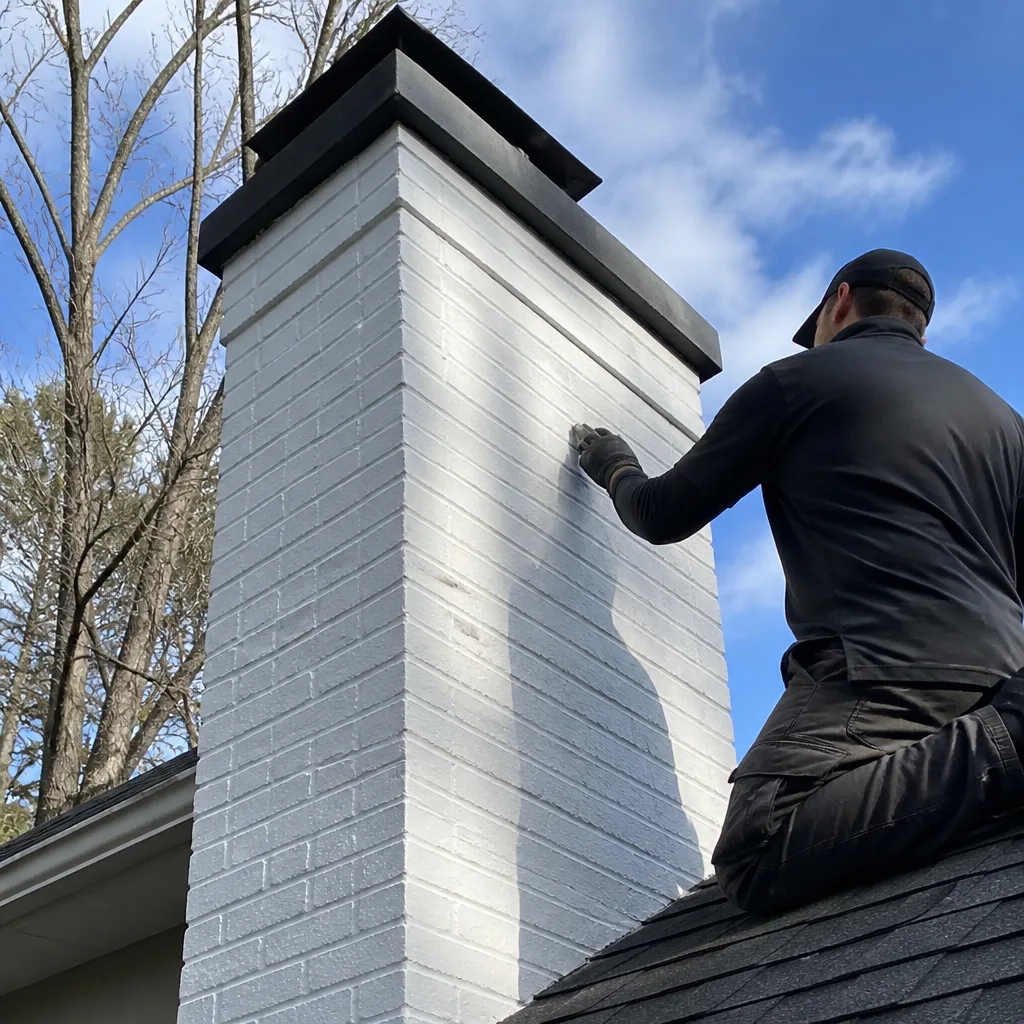 After
AfterHeatShield Crown Repair: The Atlanta Owner’s Guide
HeatShield crown repair in Atlanta typically runs $380-$720 installed, depending on crown size and whether the flue tiles need resetting. We stock HeatShield-compatible refractory crown sealant and mesh on every truck, and most jobs are completed in a single visit. Most Atlanta homeowners discover the problem during a routine sweep when water stains appear on the firebox walls, or when a chunk of the original crown washes into the yard after one of our spring gully-washers.
Which HeatShield Models This Applies To
HeatShield manufactures two crown-specific systems, and knowing which one sits on your chimney determines material cost and prep time. The CrownCoat system is a brushable, elastomeric sealant for hairline cracks and minor surface degradation on crowns with intact structural integrity. The CrownSeal system is a trowel-grade, reinforced refractory compound for crowns that have lost chunks, developed through-cracks, or separated from the flue tile surround.
Identification is straightforward. CrownCoat arrives in a single tub, pre-tinted light gray, and is applied directly to a clean, dry surface. CrownSeal ships as a two-part kit: a 40-pound bag of dry refractory mix and a gallon of acrylic polymer bonding agent. If your crown has exposed aggregate or a crack you can slide a quarter into, you need CrownSeal, not CrownCoat. We see this misidentification constantly on Atlanta homes built between 1985 and 2005, where the original crown was poured too thin and the owner tried CrownCoat three times before calling us.
HeatShield does not use model-year designations like automotive parts. Instead, compatibility is determined by crown dimensions and flue configuration. Single-flue chimneys with an 8×12 or 8×13 crown footprint are the most common match in Atlanta’s ranch and split-level stock. Multi-flue setups, common in larger homes in Buckhead and Sandy Springs, require CrownSeal in multiple bags and extended curing time. We source HeatShield materials through Haven’s buying network alongside DuraFlex and Gelco products, which keeps our pricing flat against what you’d pay ordering direct and waiting a week for freight.
Level Two Chimney Atlanta is an independent service provider. We are not affiliated with HeatShield Corporation.
Signs Your HeatShield Crown Repair Is Failing
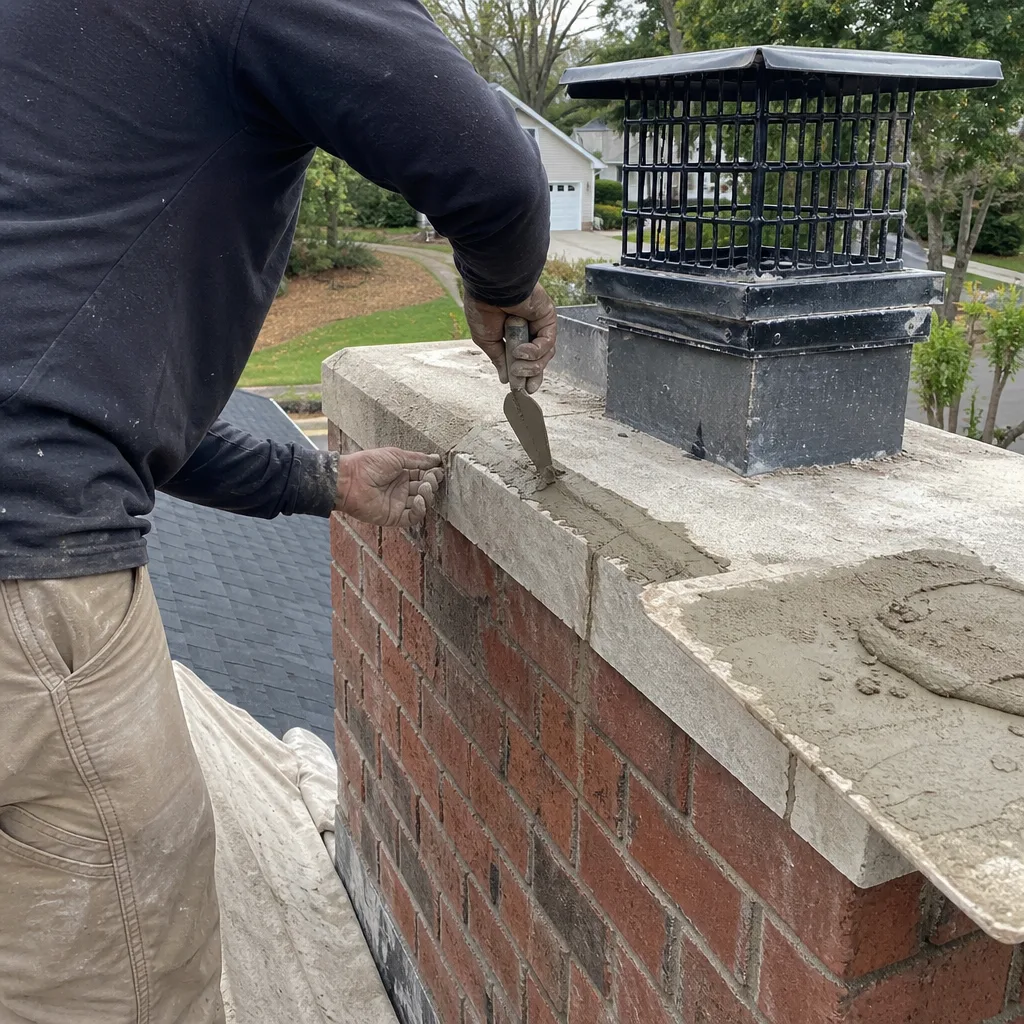
- Water pooling in the firebox after rain. A sound crown sheds water to the roof plane. When the crown cracks or the sealant fails, water follows the flue tile down and collects on the smoke shelf. In Atlanta’s clay-heavy soils, this moisture also wicks into the chimney base and accelerates liner deterioration from the outside.
- Visible cracks wider than a dime on the crown surface. Hairline checking is normal as concrete cures. A crack you can fit a dime into is a thermal breach; it will widen through Atlanta’s freeze-thaw cycles, typically November through March, and admit enough water to destabilize the flue liner below.
- Spalling or flaking concrete on the crown edges. This is advanced failure. The concrete matrix has lost adhesion, usually from years of water saturation followed by rapid drying in Georgia’s August heat. Once spalling starts, the crown’s protective slope degrades and water is directed inward, toward the flue.
- Efflorescence (white powder) on the exterior brick below the crown. This mineral deposit is concrete evidence that water is moving through the masonry. It means the crown has been compromised long enough for saturated salts to migrate to the surface. We’ve documented this pattern repeatedly in Decatur’s 1920s bungalows where original crowns were never properly sealed.
- The crown has separated from the flue tile, creating a visible gap. This is the failure mode that justifies CrownSeal over CrownCoat. The gap allows combustion gases to cool prematurely in the chase, promoting creosote buildup in an area you cannot sweep. It also admits rainwater directly onto the liner, which in Atlanta’s humid climate never fully dries between storms.
BeforeAfterReplacement Cost & What’s Included
| Scope | Price Range |
|---|---|
| CrownCoat application, single flue, cracks under 1/8 inch | $380-$490 |
| CrownSeal rebuild, single flue, partial spalling | $520-$650 |
| CrownSeal rebuild, multi-flue or full perimeter rebuild | $650-$720 |
| Flue tile reset (required if tiles have shifted) | Add $140-$220 |
What drives the range: crown square footage, number of flue penetrations, and whether we need to erect ladder scaffolding for safe access on steep pitches common in Virginia-Highland and Grant Park. Every quote is delivered in writing before work starts, per Haven Standard Clause 1. The price includes surface prep, material, application, and cleanup. We photograph the crown before and after, archive the images under Haven Standard Clause 4, and warranty the repair for 365 days. If the CrownSeal fails, we make it right.
DIY or Call Us?
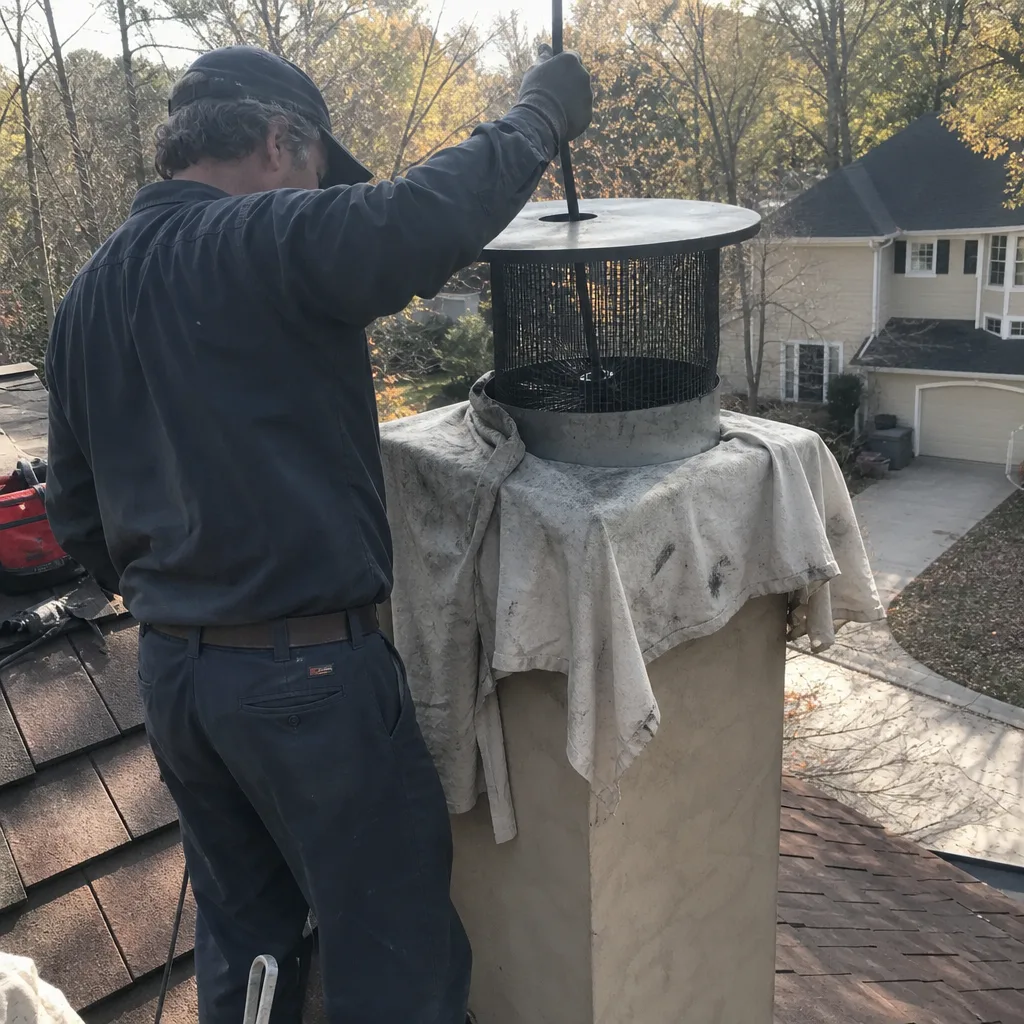
There is exactly one safe homeowner check: from the ground, binoculars in hand, look for the symptoms listed above. If you see cracks, spalling, or gaps, stop there.
Crown work involves working at height on a sloped surface, often with a compromised platform. The sealants themselves are not benign. CrownSeal’s acrylic bonding agent is skin-irritating and requires solvent cleanup. More critically, improper surface prep, which is the step most DIY guides compress into “clean and dry,” guarantees failure within two seasons. We’ve been called to redo homeowner CrownCoat jobs where the underlying concrete was still damp from the previous week’s rain, or where the crack was wider than the product’s 1/8-inch spec and the material simply fell through.
The camera doesn’t negotiate - it just shows you what’s there. We document the crown condition, quote the repair in writing, and show you the photos before you decide. Call (470) 435-7984.
FAQs
In Atlanta’s climate, a properly applied CrownSeal rebuild lasts 15-20 years; CrownCoat on minor cracks lasts 7-10 before reapplication. Georgia’s combination of intense UV, heavy spring rains, and occasional hard freezes is harder on crown sealants than purely northern or southern climates. We inspect our own work annually as part of routine sweeps and have CrownSeal installations from 2011 still performing in Grant Park and East Atlanta. Call (470) 435-7984 to schedule - estimates are free.
Patching with generic mortar or non-refractory caulk fails within one to two years and traps moisture against the concrete. HeatShield’s systems are engineered for thermal cycling; anything less is temporary. We will tell you honestly if CrownCoat is sufficient or if CrownSeal is required, and we show you the crack width measurements on camera before quoting. Call (470) 435-7984 for an exact scope and price.
Most CrownCoat applications are complete in two to three hours. CrownSeal rebuilds require four to six hours including cure time before we remove protection. We book a half-day window, arrive with materials on the truck, and you receive the photo record and written warranty before we leave. Call (470) 435-7984 to check availability.
Yes. We carry CrownCoat, CrownSeal kits, bonding agent, and reinforcing mesh on every service vehicle. We do not order after diagnosis; the materials are already here. If your crown dimensions fall outside standard single-flue or multi-flue specs, we can procure within 48 hours through Haven’s network, but this is rare in Atlanta’s housing stock. Call (470) 435-7984 to confirm fit and book.
Written by Corrine Halstead, Owner, Level Two Chimney Atlanta at Level Two Chimney Atlanta, serving Atlanta and nearby areas.