
Last updated September 22, 2026
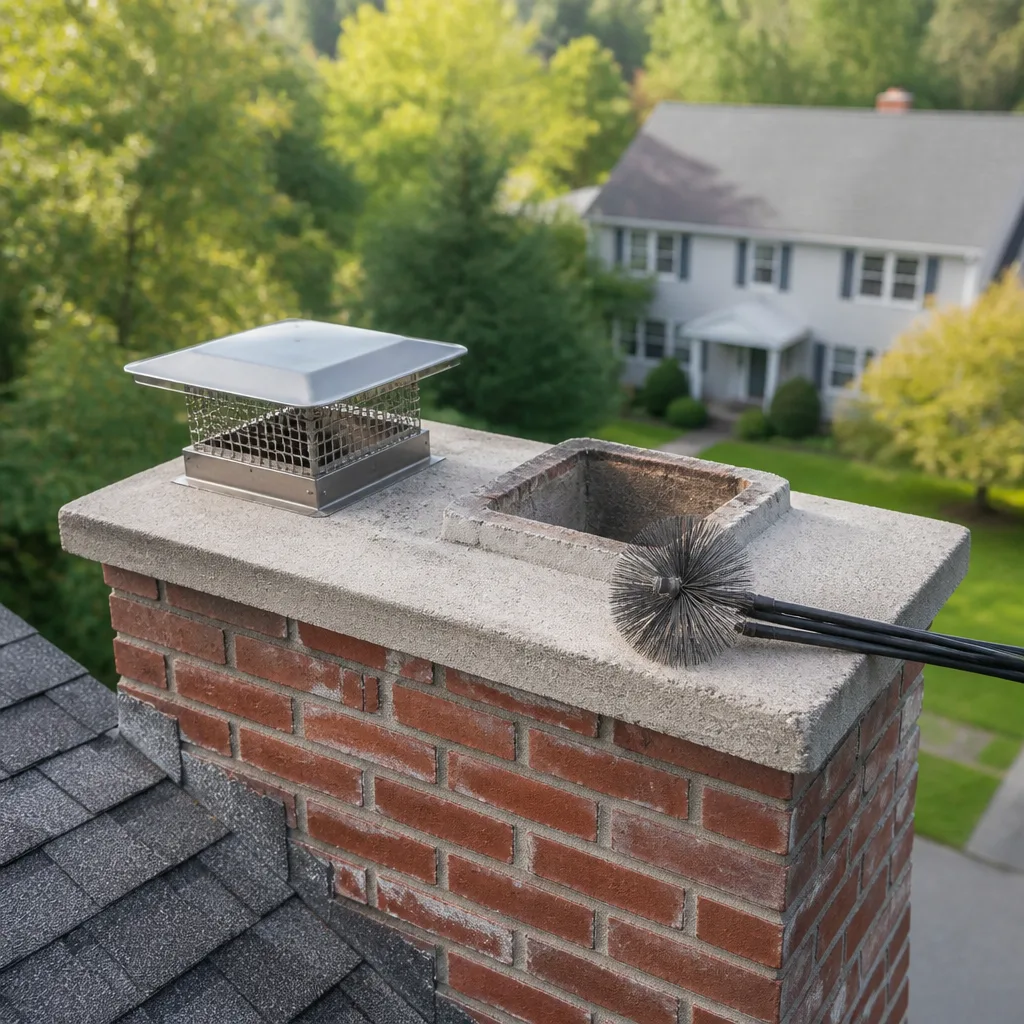
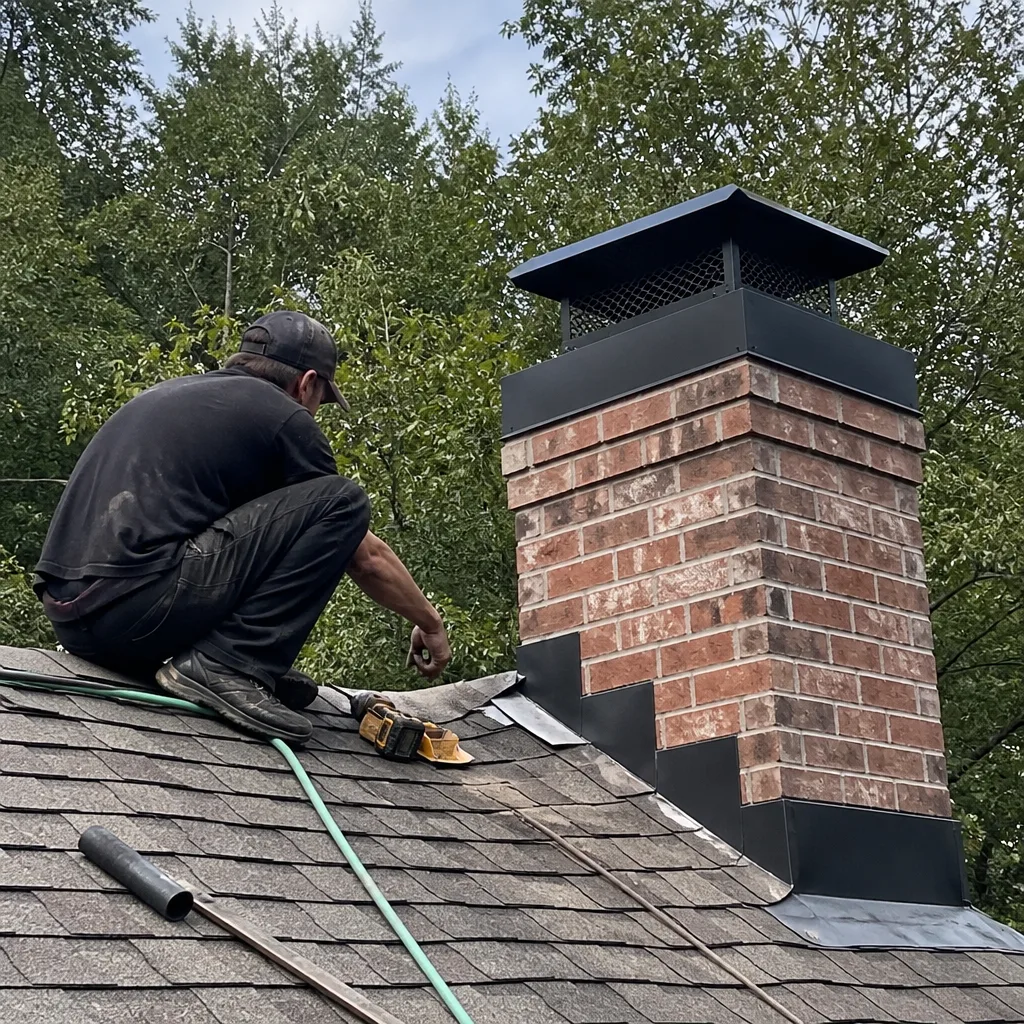
Level 1 sweep and inspection to the NFPA 211 annual standard - flue, crown, cap, and flashing checked and photographed
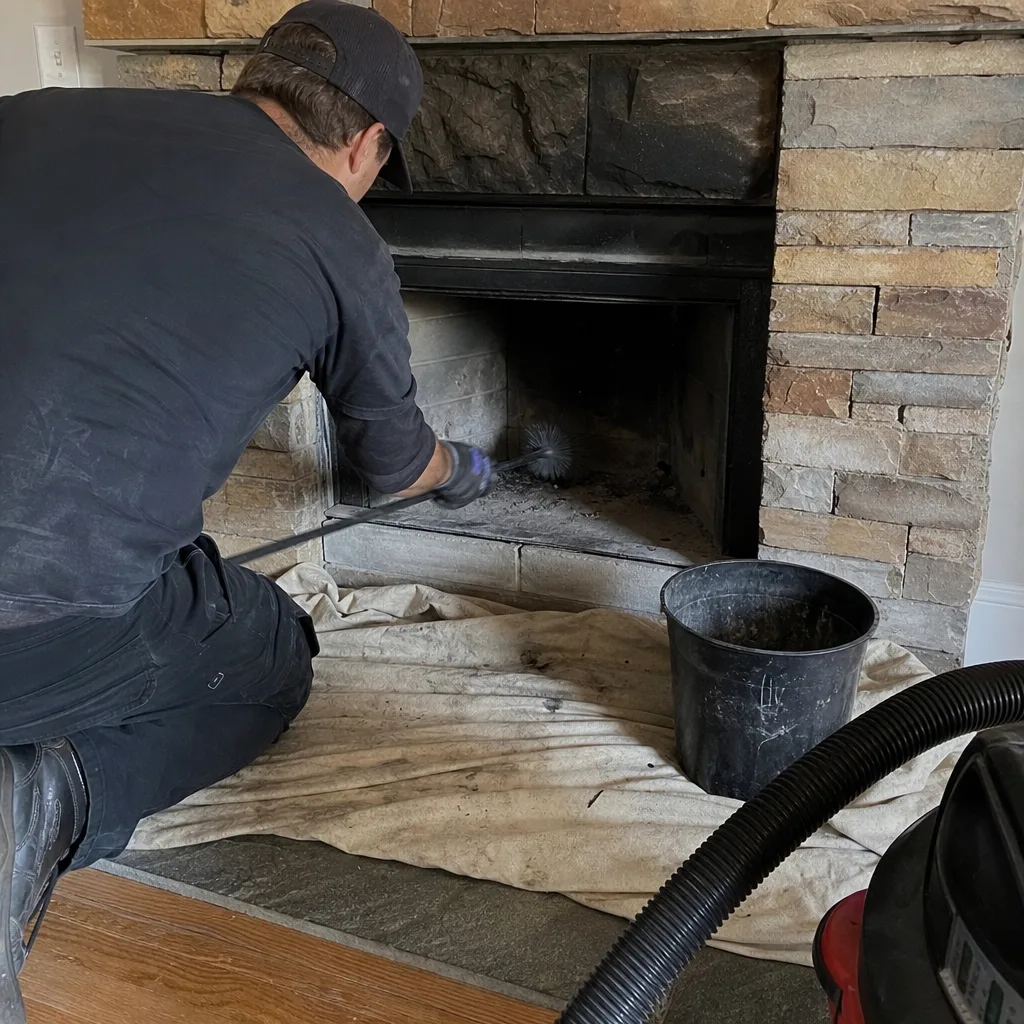
Chimney sweep logs do not sweep chimneys. They loosen some creosote - which then falls where a brush and vacuum still have to collect it.
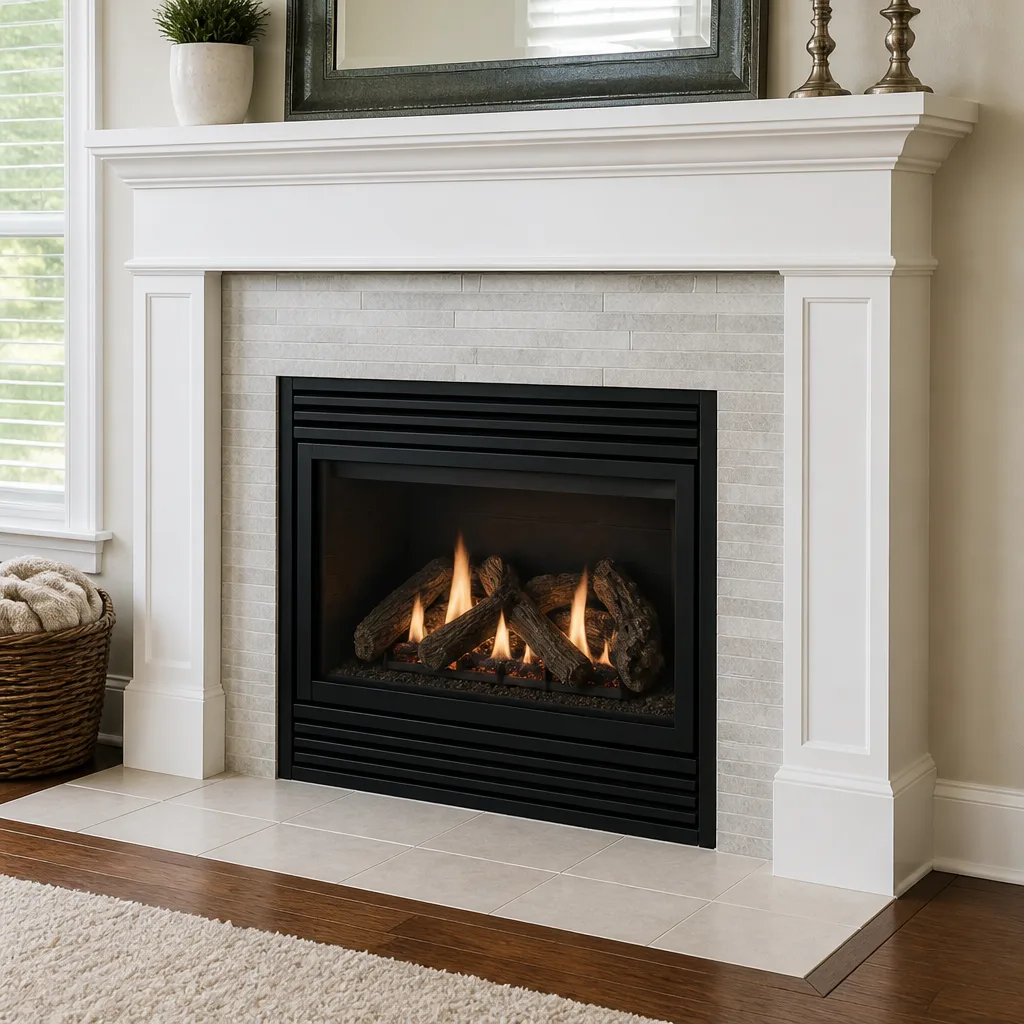
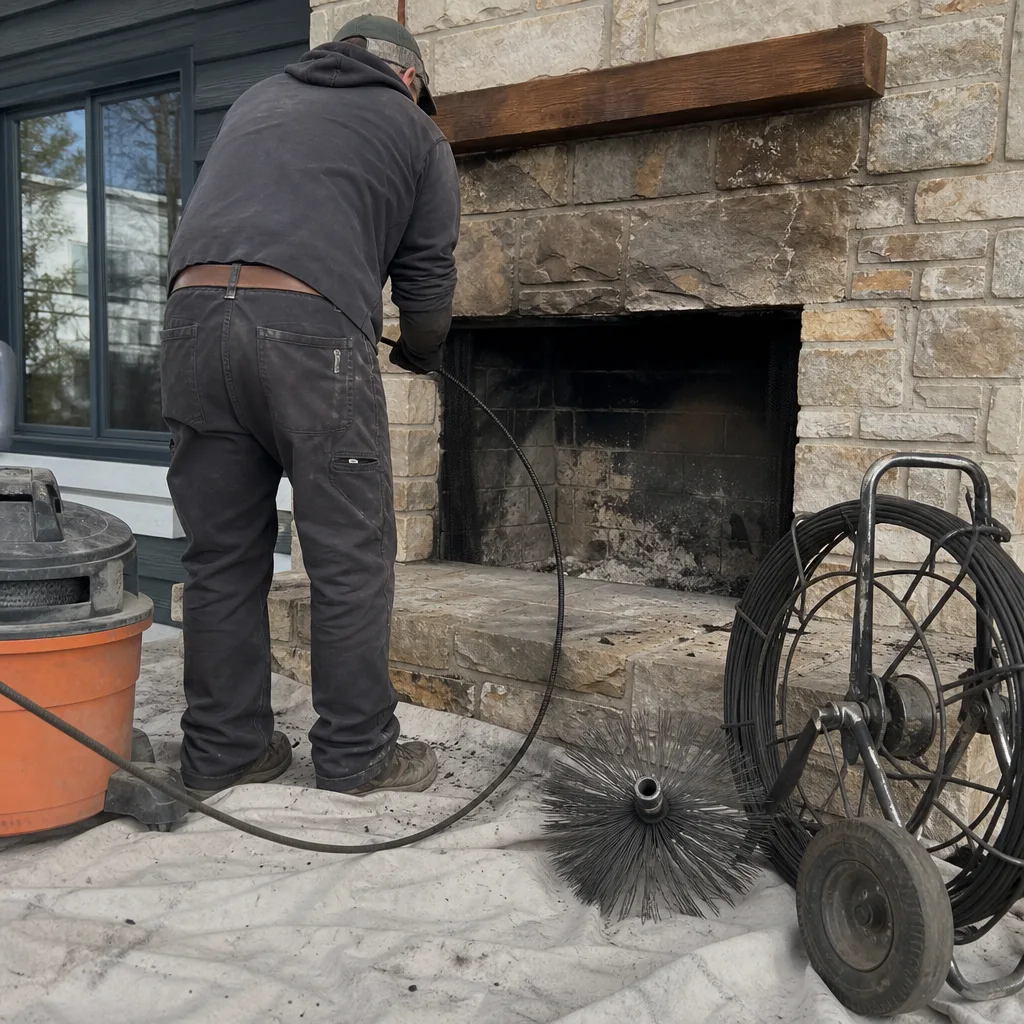 Before
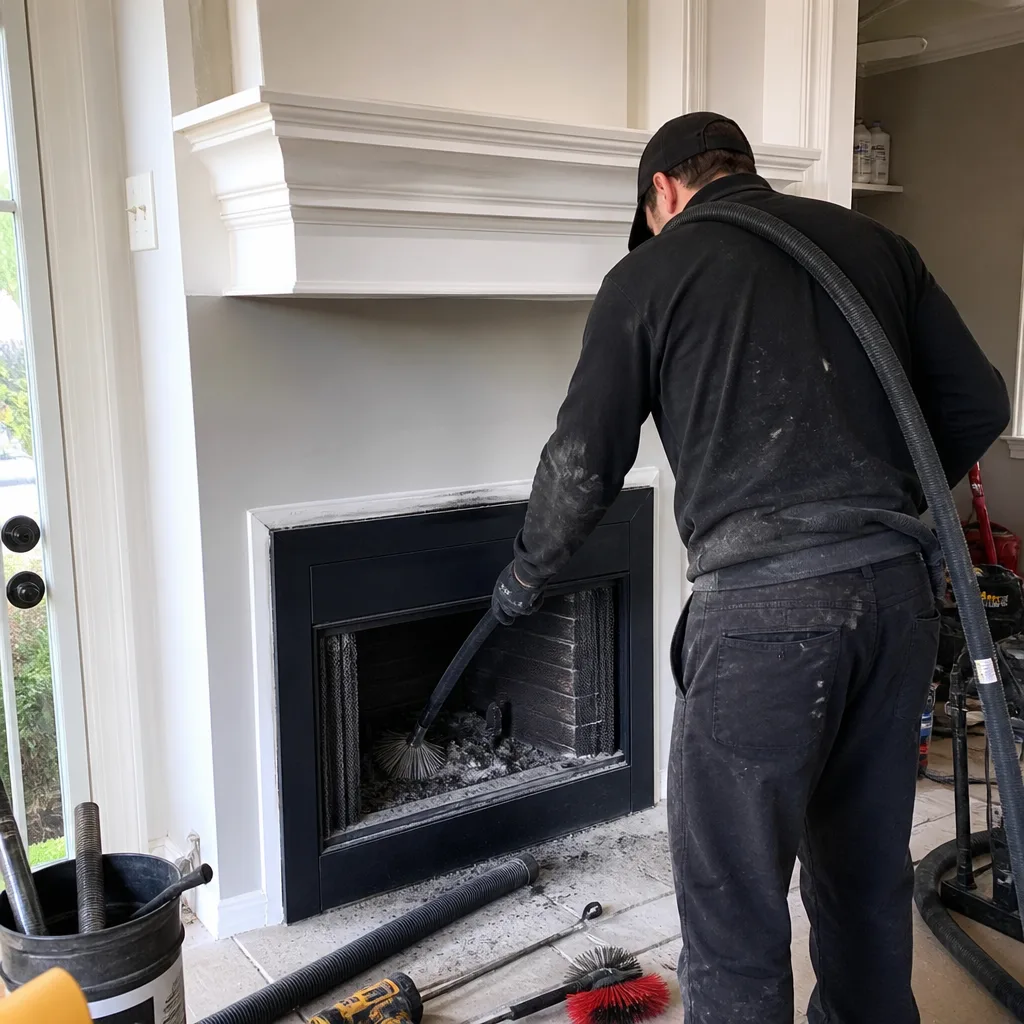 After
After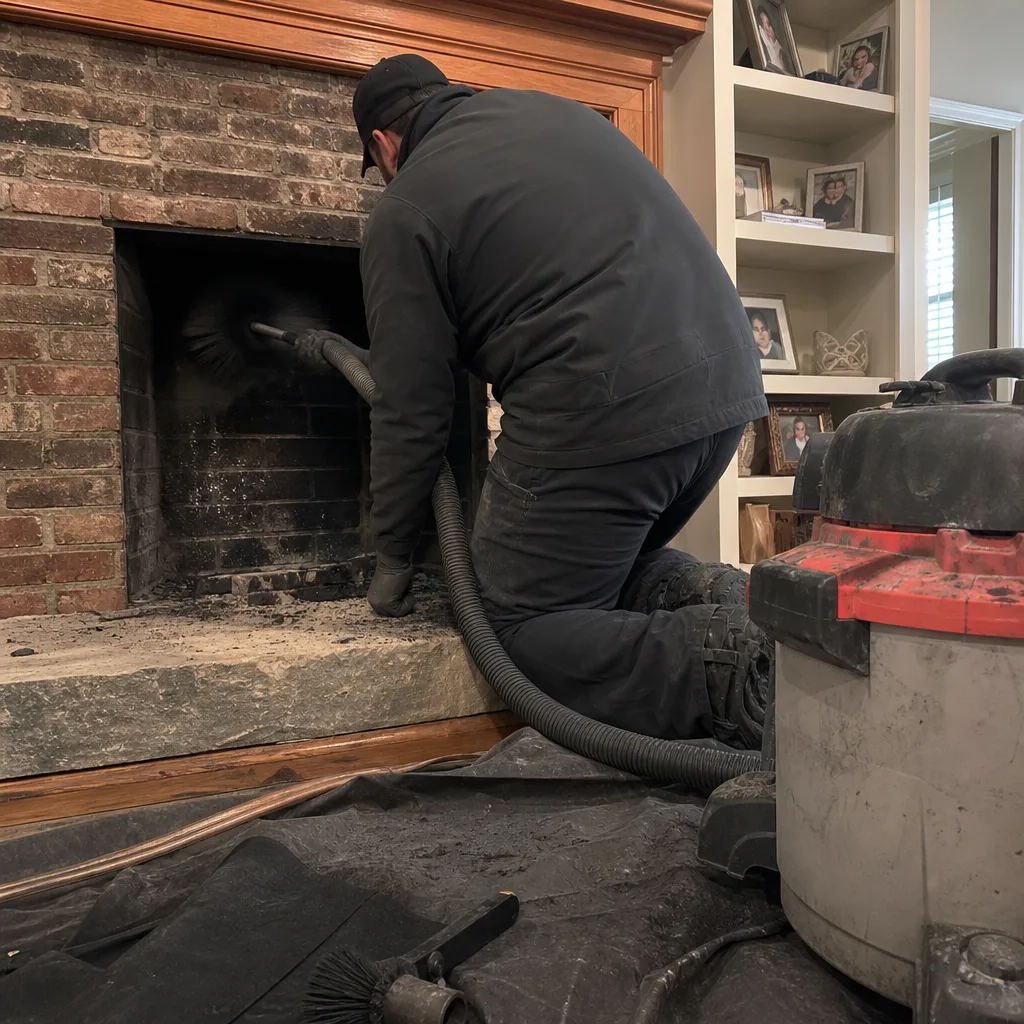 Before
 After
After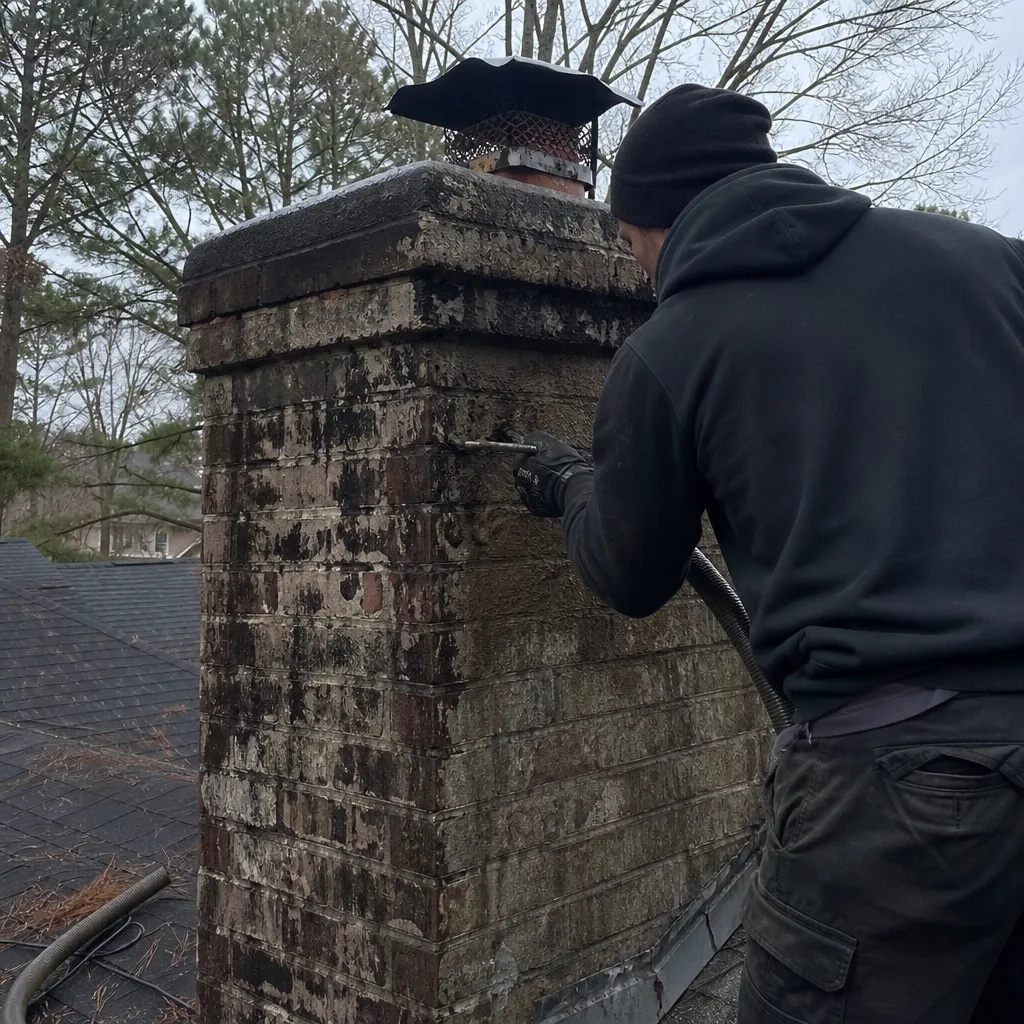 Before
 After
AfterDIY vs Professional Chimney Cleaning: The Atlanta Homeowner’s Decision Guide
You can legally and safely clean your own chimney in Atlanta - if you have Stage 1 deposits. The catch is that you cannot know whether you have Stage 1 deposits without the camera that tells you whether DIY is appropriate. That’s not a sales pitch; that’s the logical sequence. Most Atlanta homeowners who ask us about DIY chimney cleaning have already watched a few videos and priced a brush kit on Amazon. What those videos rarely explain is that creosote progresses through three distinct stages, and only Stage 1 responds to a brush. By the time you can see Stage 2 or 3 from the firebox, you’ve already missed the window where DIY made sense. In this guide, we’ll walk through exactly how to tell what you’re dealing with, what equipment actually matches professional standards, and when the money you think you’re saving becomes a cost you can’t recover from. For more guides & resources, see our blog.
Quick Answer
DIY chimney cleaning in Atlanta is appropriate only when you have Stage 1 creosote (dry, flaky, easily brushed), a structurally sound flue liner confirmed by recent camera inspection, and no changes to your appliance or fuel type since that inspection. Professional cleaning is required for Stage 2 glazed creosote, any liner damage, or if you need documentation for insurance or home sale purposes. The only way to confirm Stage 1 status is with a camera-scan inspection - which is itself a professional service.
Table of Contents
- What Creosote Stages Actually Mean for Your Chimney
- DIY Equipment and Real Costs in the Atlanta Market
- Three Conditions Where DIY Cleaning Is Appropriate
- Three Conditions Where DIY Creates Liability
- The Documentation Gap and Georgia Homeowners Insurance
- Decision Tree: Should You DIY or Call a Pro?
- How Atlanta’s Climate Affects Creosote Buildup
- Common Mistakes to Avoid
- When to Call a Professional
- Frequently Asked Questions
- The Bottom Line
BeforeAfterWhat Creosote Stages Actually Mean for Your Chimney
Creosote is not one substance. It’s a progressive buildup that hardens and changes chemistry as it accumulates. Understanding these stages is the entire foundation of the DIY vs. professional decision. We’ve inspected chimneys in Virginia-Highland, Grant Park, and Buckhead where homeowners were certain they had “just a little soot” and were looking at Stage 2 glazed deposits that required chemical treatment. We’ve also seen Stage 1 flues in Decatur that a homeowner could have managed themselves - but they didn’t know that because no one had shown them the difference.
Stage 1 Creosote: The DIY Window
Stage 1 is dry, flaky, and dark brown to black. It brushes off easily with a standard wire or poly brush. It feels like coarse coffee grounds when you touch it. If you shine a bright light up your flue and see a powdery surface that flakes away with light pressure, you may have Stage 1. This is the only stage that responds to mechanical brushing alone.
In our experience across Atlanta’s older neighborhoods - Inman Park, Candler Park, the historic districts where fireplaces see irregular use - Stage 1 is common in chimneys swept annually or in gas-converted wood fireplaces that haven’t burned much solid fuel. The key variable is frequency of use and fuel quality. Seasoned hardwood burned hot produces less creosote than smoldering fires with unseasoned pine, which is what we see more often than we’d like in Atlanta’s abundant tree canopy.
Stage 2 Creosote: Where DIY Ends
Stage 2 is glazed, shiny, and hardened. It looks like black glass or tarry flakes that are fused to the flue wall. You cannot brush this off. It requires a chemical treatment - typically a powder or spray applied by a professional, left to react for a prescribed period, then removed with a rotary system. The chemicals are caustic and require respiratory protection and controlled application.
We’ve treated Stage 2 deposits in chimneys from Sandy Springs to East Atlanta Village. The homeowners invariably thought they were looking at “thick soot.” One couple in Ormewood Park had been running a brush through their flue twice yearly for three years, never realizing they were polishing the glaze rather than removing it. Their “cleaning” was cosmetic. The glaze remained, and it was thick enough to sustain a chimney fire.
Stage 3 Creosote: Professional-Only, Often Removal
Stage 3 is a hardened, glossy, tar-like coating that is essentially flammable enamel on your flue walls. It may be puffy or distorted from repeated heating cycles. At this stage, mechanical removal risks damaging clay flue tiles or stainless liners. Chemical treatment may be attempted, but often the only safe remedy is liner replacement or, in extreme cases, rebuilding the flue.
Stage 3 is less common in well-maintained residential systems, but we encounter it in Atlanta’s rental properties, inherited homes where maintenance history is unknown, and houses where the previous owner burned everything from wrapping paper to pallet wood. In Kirkwood, we once found Stage 3 deposits so thick they reduced a 6-inch flue to under 4 inches of clear passage - a severe carbon monoxide risk that no amount of homeowner brushing would have addressed.
The critical point: You cannot distinguish Stage 1 from Stage 2 from the firebox with a flashlight. The texture difference is visible only with a camera that can pan and focus up the flue. A mirror on a stick won’t do it. A phone photo up the damper won’t do it. The inspection is the gate that determines whether DIY is even on the table.
DIY Equipment and Real Costs in the Atlanta Market
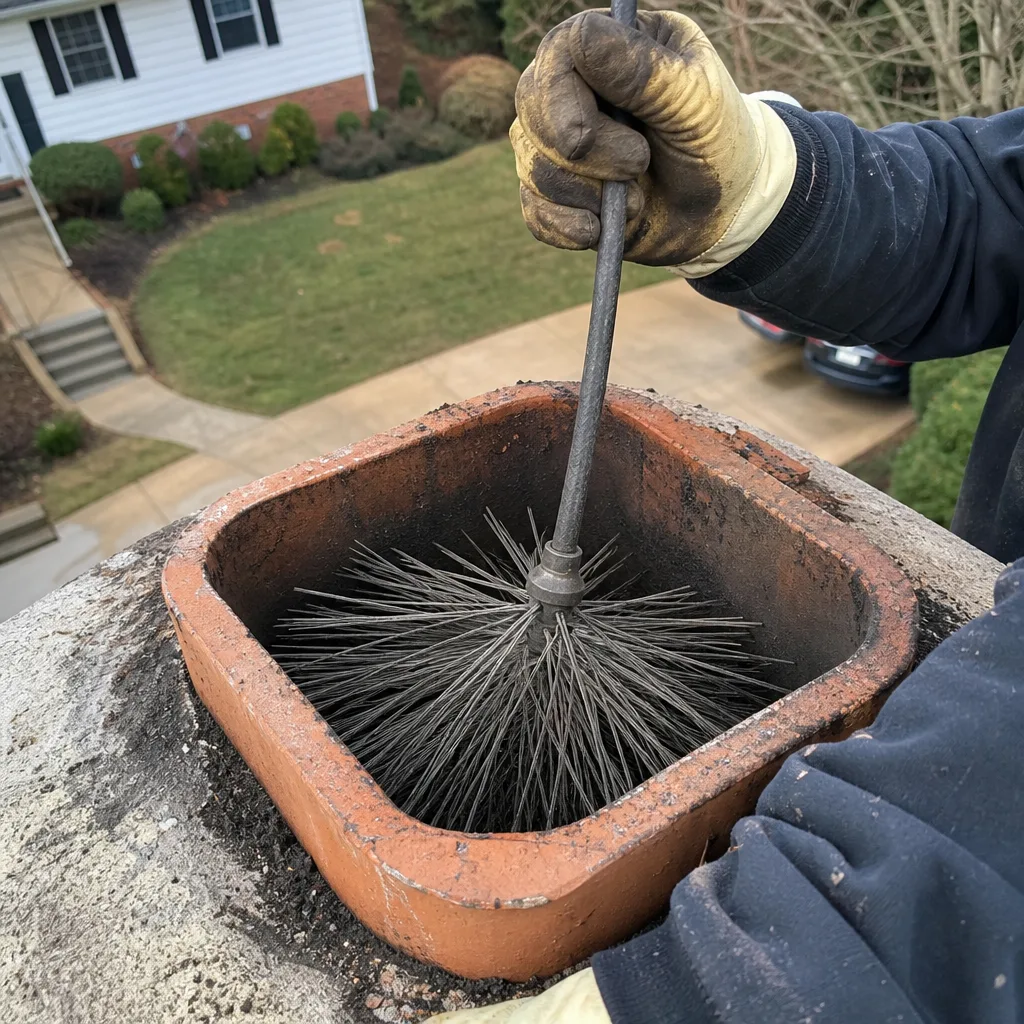
The online narrative around DIY chimney cleaning focuses on the $30 brush kit and ignores what it actually takes to do the job to a standard that protects your home and health. Let’s price this honestly for the Atlanta market in 2024-2025.
Minimum Equipment to Match Professional Standards
- Rotary brush system with flexible rods: A basic homeowner-grade system runs $120-$180 at Atlanta-area Home Depot or Lowe’s locations. Professional-grade rotary systems with variable speed control start around $350. The cheap kits use compressed rods that can separate in the flue - we’ve retrieved broken rod sections from chimneys in Midtown and Old Fourth Ward.
- HEPA-filtered vacuum: Standard shop vacs recirculate fine particulate through their exhaust. Creosote particles are carcinogenic and extremely fine. A true HEPA vacuum with sealed filtration starts at $200 for a compact unit, $350+ for a capacity that won’t require constant emptying. Without this, you’re spreading creosote through your living space.
- Inspection light and mirror system: A bright LED work light ($40-$80) and a proper chimney inspection mirror ($25-$40) are minimums. But as established, these won’t reveal creosote stage reliably. A basic borescope camera that can navigate a flue runs $80-$150 for consumer models with limited resolution and articulation.
- Personal protective equipment: NIOSH-approved N95 or P100 respirator ($25-$40), not a dust mask. Chemical-resistant gloves ($15). Eye protection ($10). Drop cloths and sealing materials for the fireplace opening ($20-$30).
- Access equipment: If your chimney requires roof access for proper top-down cleaning, add ladder safety equipment or professional roof access. Many Atlanta homes in Morningside-Lenox Park, Druid Hills, and the historic districts have steep pitches that make this genuinely hazardous.
Realistic total: $500-$850 to equip yourself to a standard that doesn’t create more problems than it solves. This assumes you already own basic tools and have safe roof access. The $30 brush kit is a toy in this context.
The Hidden Cost: Your Time and the Documentation Gap
A professional sweep and inspection takes 45-90 minutes. A homeowner’s first DIY attempt, including setup, learning curve, and cleanup, typically consumes 3-5 hours. More importantly, you produce no documentation. We’ll address why that matters for insurance specifically in a later section.
The supposed savings evaporate quickly. Our Chimney Cleaning & Sweep in Atlanta service includes the camera inspection, the sweep, the photo record, and the written condition report. When homeowners in Brookhaven or Chamblee price the actual equipment to match that scope, the difference is often narrower than expected - and that’s before factoring in the risk of doing it wrong.
Three Conditions Where DIY Cleaning Is Appropriate
We’re not here to tell you that DIY is never appropriate. That would be dishonest, and it would ignore the reality that some Atlanta homeowners are equipped and informed enough to maintain their own systems. Here are the three conditions that must all be true.
Condition 1: Stage 1 Creosote Confirmed by Camera
You need a recent camera inspection - within the past 12 months - that explicitly documents Stage 1 deposits and sound flue condition. “I looked up there and it looked fine” doesn’t qualify. The inspection must be from a certified sweep who can provide the footage. If you’re relying on a neighbor’s assessment or a home inspector’s general report, you don’t have the data you need.
In our practice, we offer these inspections as standalone services. The footage belongs to you. If it shows Stage 1 and sound structure, we’ll tell you that. We’ve had customers in Decatur and Avondale Estates return annually for the inspection, handle the brushing themselves, and call us back when the camera shows a change. That’s a rational approach.
Condition 2: No Structural Changes or Appliance Modifications
If you’ve changed anything about your fireplace system since the last inspection - new insert, gas log conversion, damper repair, storm damage, or even a significant masonry repair - the previous camera data is no longer fully valid. The system is different. What was Stage 1 in a open masonry fireplace may behave differently with a retrofitted insert that changes draft patterns and flue temperatures.
Atlanta’s housing stock includes many 1920s-1950s bungalows and ranch homes where fireplace modifications are common but undocumented. In Reynoldstown, we regularly encounter gas log conversions installed by previous owners with no permit record and no inspection. The flue may be oversized for the new appliance, or the liner may have been damaged during installation. DIY cleaning on these systems assumes a stability that may not exist.
Condition 3: You Can Document What You Did and When
Even if you’re not concerned about insurance today, you should keep a record. Date, photos of the brush and deposits removed, notes on flue condition, and any anomalies observed. This is basic maintenance logging. If you sell the home, if you have a chimney fire, if you need to make an insurance claim - “I cleaned it myself a few times, I think” is not documentation.
The Haven Standard’s Clause 4 - documented photo record on every job - exists because we’ve seen how claims and disputes get resolved. Documentation is evidence. Memory is not.
Three Conditions Where DIY Creates Liability
These are not scare tactics. These are the conditions where we’ve seen DIY efforts lead to property damage, injury, or denied insurance claims in the Atlanta market.
Condition 1: Any Liner Damage or Deterioration
Clay flue tiles crack. Stainless liners corrode or separate at joints. Poured liners develop voids. None of this is visible from the firebox without a camera. Cleaning a damaged liner with a rotary brush can enlarge cracks, dislodge fractured tiles, or catch and torque a separated liner joint. We’ve been called to homes in Cabbagetown and Little Five Points where a homeowner’s “thorough cleaning” with a rented rotary tool destroyed a liner that needed only spot repair.
The safety issue is direct: a damaged liner allows heat, sparks, and combustion gases to reach combustible framing. Atlanta’s older homes often have balloon framing or other construction methods that allow rapid fire spread once ignition occurs. You cannot assess liner integrity without the camera. The cleaning itself can be the event that turns a manageable defect into an emergency.
Condition 2: Stage 2 or 3 Creosote Present
Attempting to brush Stage 2 glazed creosote is ineffective and potentially dangerous. The glaze is flammable. Aggressive brushing can generate heat through friction. More commonly, the homeowner polishes the surface without removing mass, creating a false sense of security while the fire hazard remains. Stage 3 deposits are worse - the mechanical removal process can damage the flue, and the dust generated is highly toxic.
Chemical treatment for Stage 2 requires products that are not sold to consumers in ready-to-use form for good reason. The application requires controlled ventilation, respiratory protection, and knowledge of reaction times and neutralization procedures. This is not a homeowner task.
Condition 3: Appliance or Fuel Changes Since Last Professional Inspection
This bears repeating because it’s so commonly missed. If you’ve inherited a home in East Atlanta, Kirkwood, or West End and you don’t have the full maintenance history, you don’t know what you’re working with. If you’ve converted from wood to gas, or added an insert, or changed from vented to vent-free gas logs, the flue dynamics have changed. The creosote pattern may be atypical. The liner may be wrong for the new appliance. DIY cleaning on a system with unknown modification history is maintenance without foundation.
We provide Fireplace Services in Atlanta that include post-modification inspections specifically for this scenario. The inspection is often the most valuable part of the service.
The Documentation Gap and Georgia Homeowners Insurance
This is the point competitors rarely address, and it’s where DIY’s hidden cost becomes visible. Georgia homeowners insurance policies vary in their chimney maintenance requirements, but the trend is toward explicit documentation demands - especially after chimney fire claims have risen nationally over the past decade.
Here’s what we’ve learned from customers who’ve navigated claims, and from insurance adjusters who’ve explained their processes:
- Post-fire investigations require maintenance records. If you have a chimney fire and file a claim, the insurer will ask when the chimney was last cleaned and by whom. “I did it myself” is not automatically disqualifying, but “I did it myself and I have no photos, no receipts, no dated record” weakens your position significantly.
- Professional documentation carries weight. A dated invoice from a licensed sweep with scope of work and condition notes is standard evidence. Our Haven Standard documentation - written price, written scope, photo record, written warranty - is designed for this purpose. Clause 4’s photo record has been cited in claim resolutions.
- Negligence findings affect coverage. If the insurer determines that a chimney fire resulted from failure to maintain the system, or from improper maintenance that damaged the liner, they may reduce or deny coverage. We’ve seen this in Georgia cases where DIY cleaning with improper tools was cited as a contributing factor.
- Home sale disclosures in Georgia. Sellers must disclose known defects. A chimney with unknown condition - “we cleaned it ourselves occasionally” - creates liability exposure that a documented professional history does not. Buyers’ inspectors are increasingly requesting maintenance records for fireplaces and chimneys.
The documentation gap is not theoretical. In 2023, a homeowner in Sandy Springs contacted us after a chimney fire that started in glazed creosote they’d assumed was “just soot.” Their insurer paid the structural damage claim but declined the chimney rebuild, citing lack of professional maintenance records. The gap cost them $4,200 out of pocket for liner replacement that professional documentation might have covered.
Our Chimney Repair in Atlanta services include documentation packages designed for insurance and real estate compliance. This is not an upsell. It’s a response to how the world actually works.
Decision Tree: Should You DIY or Call a Pro?
Here’s the honest framework we use when Atlanta homeowners ask us this question directly. Answer each question in sequence.
- Do you have a camera inspection from the past 12 months that explicitly shows Stage 1 creosote and a sound liner?
- No → Professional inspection required before any cleaning decision. Call (470) 435-7984 or book through Level Two Chimney Atlanta home.
- Yes → Proceed to question 2.
- Has anything about your fireplace, fuel type, or chimney structure changed since that inspection?
- Yes → Professional re-inspection required. The previous camera data is no longer fully valid.
- No → Proceed to question 3.
- Do you have or are you willing to acquire proper equipment: rotary brush system, HEPA vacuum, respiratory protection, and safe roof access?
- No → Professional cleaning is the cost-effective choice. Equipment purchase exceeds service cost for most homeowners.
- Yes → Proceed to question 4.
- Do you need documentation for insurance, home sale, or warranty purposes?
- Yes → Professional service provides the documented record you need. DIY cannot replicate this.
- No → DIY may be appropriate. Maintain detailed personal records with photos and dates.
The decision tree is conservative by design. It errs toward professional assessment because the cost of being wrong - liner damage, undetected Stage 2, insurance gap - exceeds the cost of the inspection. But it does not eliminate DIY as an option for the genuinely informed and equipped homeowner.
How Atlanta’s Climate Affects Creosote Buildup
Atlanta’s specific climate patterns matter for maintenance frequency and creosote formation. This is local context that generic national guides miss entirely.
Our humid subtropical climate means extended shoulder seasons where fireplaces get intermittent use - October evenings in the 50s, March mornings with frost. These partial burns, where fires are started and left to smolder rather than burned hot to completion, produce more creosote than sustained cold-weather burning. In Minneapolis, a fireplace burns hard all winter. In Atlanta, the same fireplace may see 40 low-temperature starts per season, each one depositing creosote without the sustained heat that would burn some of it off.
The pine pollen season, typically February to April, also affects chimney systems. Pollen enters chimneys through top openings, mixes with moisture, and creates a sticky film that captures soot particles. We’ve noted accelerated buildup in chimneys without proper caps - which is why we source caps from Gelco and Olympia Chimney through our Haven buying network, sized specifically for Atlanta’s common flue dimensions.
Atlanta’s freeze-thaw cycles, while milder than northern climates, still stress chimney crowns and masonry. Water penetration from crown cracks accelerates liner deterioration, which changes how deposits adhere and how safely they can be removed. A flue with compromised mortar joints between clay tiles will accumulate creosote differently than a sound flue - another variable invisible without camera inspection.
Neighborhood-specific factors: Atlanta’s tree canopy is magnificent and problematic. In areas like Druid Hills, Ansley Park, and the neighborhoods near the Chattahoochee River, dense oak and pine cover means more leaf litter, more organic debris, and more animal intrusion. Squirrels and raccoons are common chimney occupants. Their nesting materials combine with creosote to create particularly hazardous deposits. DIY brushing on a flue with hidden nesting debris can compact the material rather than remove it.
For homeowners in these areas, we recommend more frequent inspection - every year for wood-burning systems, every two years for gas - and always with camera documentation. The Haven Standard’s Clause 4 requirement for photo records was developed partly in response to Atlanta’s specific environmental challenges.
Common Mistakes to Avoid
- Using a standard shop vac without HEPA filtration. Creosote particles are sub-micron and carcinogenic. A shop vac exhausts them into your living space. In Atlanta’s tight, energy-efficient homes in neighborhoods like Atlantic Station or the newer Westside developments, this concentrates exposure. Professional sweeps use sealed HEPA systems; Famco and Copperfield both manufacture filtration equipment we deploy on every job.
- Assuming “I burn dry wood” means no creosote. Even properly seasoned hardwood produces creosote when burned at low temperatures. Atlanta’s mild weather encourages exactly these low-temperature burns. The wood quality is one variable; the burn temperature is equally important.
- Cleaning from the bottom only. Bottom-up brushing pushes debris down but doesn’t fully clear the flue. Professional sweeps clean from the top down where possible, or use dual-direction rotary systems that extract debris completely. We’ve found compacted soot piles in Atlanta chimneys where years of bottom-only brushing created blockages.
- Ignoring the smoke chamber and firebox. The smoke chamber - the area above the damper and below the flue - accumulates creosote and is difficult to reach with standard homeowner tools. It’s also a common ignition point for chimney fires. A brush kit that only addresses the flue leaves this hazard untouched.
- Using the wrong brush size or material. A brush too small for the flue diameter won’t contact all surfaces. A brush too large can jam or damage clay tiles. Poly brushes are appropriate for some liners but not others. Most homeowner kits are one-size-fits-none compromises.
- Cleaning without inspecting first. This is the fundamental error that underlies all others. You cannot determine what cleaning method is appropriate without knowing what you’re cleaning. The inspection isn’t a separate step - it’s the step that makes all subsequent steps possible.
- Assuming a clean flue means a safe system. Creosote removal is one component of chimney safety. Liner condition, crown integrity, clearances to combustibles, and appliance proper installation are equally critical. A homeowner can have a spotless flue and a dangerous system.
When to Call a Professional
Call a professional when any of the following apply: you don’t have a recent camera inspection; you’ve changed your appliance or fuel type; you’ve noticed draft problems, smoke backup, or unusual odors; your chimney hasn’t been inspected in over two years; you’re preparing to sell your home; you need documentation for insurance; or you’ve attempted DIY cleaning and the results are uncertain. Not sure where to start? Read How to Hire a Chimney Cleaning Contractor in Atlanta: A Step-by-Step Guide.
Level Two Chimney Atlanta offers free estimates in Atlanta - call (470) 435-7984. Every estimate includes a written price, written scope, and written warranty before any work begins, under Haven Standard Clause 1. Our background-checked, uniformed technicians arrive with license information, a named assignment, and a text notification when en route. The camera inspection and photo record are included as standard, not optional, under Clause 4 - the practice we’ve maintained since 2009.
Frequently Asked Questions
Professional chimney sweep and inspection in Atlanta typically ranges from $250 to $450 for a standard masonry fireplace with Level 2 camera inspection included. Gas fireplace inspections run lower, typically $150 to $250. Factors affecting price include flue accessibility, deposit stage, and whether chemical treatment for glazed creosote is required. We deliver a written price before any work starts - no exceptions, no surprises. Call (470) 435-7984 for an exact quote; estimates are free.
The National Fire Protection Association recommends annual inspection for all chimney systems, with cleaning frequency determined by deposit accumulation rather than calendar alone. In Atlanta’s climate, wood-burning fireplaces used regularly typically need annual sweeping. Occasional-use systems may extend to every two years if inspection confirms minimal buildup. Gas systems require annual inspection but less frequent cleaning. The definitive answer comes from camera inspection, not assumption.
You need a new liner when the existing liner is damaged, improperly sized for your appliance, or missing entirely - not because of creosote accumulation alone. Cleaning cannot repair cracked clay tiles, separated stainless joints, or corroded metal. We evaluate liner condition with camera inspection and provide the footage for your review. If a competitor has recommended liner replacement, our Free Second Opinion on any written estimate applies. We’ve found that second opinions in Atlanta frequently reveal that spot repair or resurfacing with HeatShield is sufficient, avoiding full replacement cost.
Skipped maintenance leads to progressive creosote accumulation, which increases chimney fire risk and reduces draft efficiency. Carbon monoxide hazard rises as flue passages narrow. Liner damage worsens unchecked, potentially allowing heat transfer to combustible framing. In Atlanta’s competitive real estate market, undisclosed chimney condition can derail sales or trigger post-sale liability. The cost of deferred maintenance typically exceeds the cost of regular service - often by multiples. Call (470) 435-7984 to schedule before the next burning season.
Chimney cleaning logs contain chemicals intended to loosen light creosote deposits. They are not a substitute for mechanical removal and do not address Stage 2 or 3 deposits. We occasionally see them used in Atlanta homes as a complete maintenance alternative, which they are not. At best, they may reduce light Stage 1 buildup between professional sweeps. They do not inspect, document, or address structural condition. They are not recognized by insurers or building codes as adequate maintenance.
Yes, homeowners may clean their own chimneys in Georgia. There is no licensing requirement for residential self-maintenance. However, legality is not the relevant standard - safety and documentation are. Georgia building codes and fire codes reference NFPA 211 standards for chimney maintenance, which specify inspection scope and documentation. DIY cleaning that results in damage or fire may affect insurance coverage regardless of legality. Professional service provides the documented compliance that DIY cannot self-generate.
The Bottom Line
The DIY vs. professional chimney cleaning decision is not about skill or cost in the abstract. It’s about information: do you know, with camera verification, what stage of creosote you’re dealing with and whether your liner is sound? If you have that information and it’s favorable, DIY is a legitimate option for the equipped homeowner. If you lack that information - which describes most Atlanta homeowners we encounter - the inspection itself is the necessary first step, and it’s a professional service.
The Haven Standard was built on this reality. Since 2009, we’ve completed more than 38,000 chimney inspections and cleanings, every one with a written price before work started and a documented record when done. The 365-Day Done Right Promise, the Free Second Opinion, the camera-scan documentation - these exist because we’ve seen what happens when homeowners make decisions without adequate information, and when competitors provide service without adequate transparency.
We’re not opposed to DIY. We’re opposed to uninformed DIY, which is what happens when the industry fails to explain what homeowners actually need to know. If you’re uncertain where you stand, call (470) 435-7984. We’ll tell you what the camera shows, what it means, and what it costs - in writing, before any work begins.
Written by Corrine Halstead, Owner at Level Two Chimney Atlanta, serving Atlanta since 2009.