
Last updated September 22, 2026
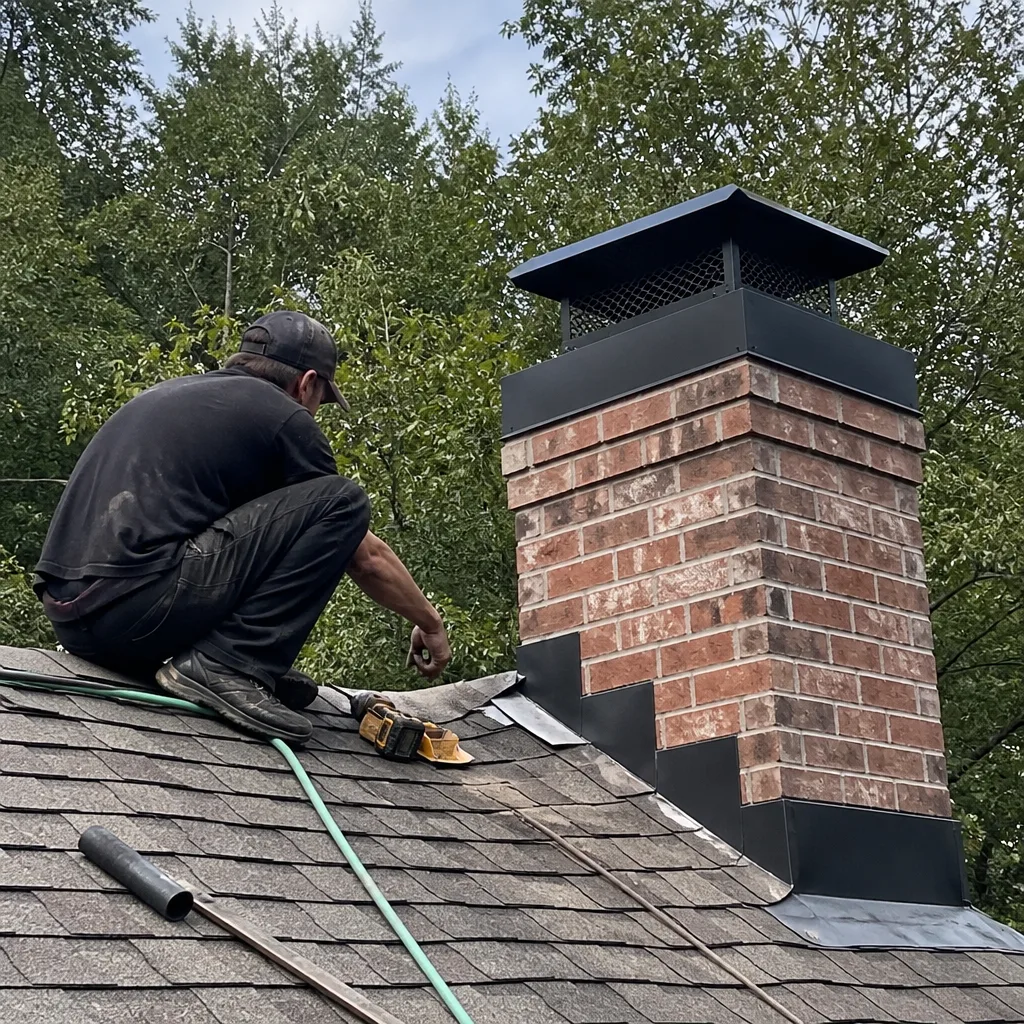
Level 1 sweep and inspection to the NFPA 211 annual standard - flue, crown, cap, and flashing checked and photographed
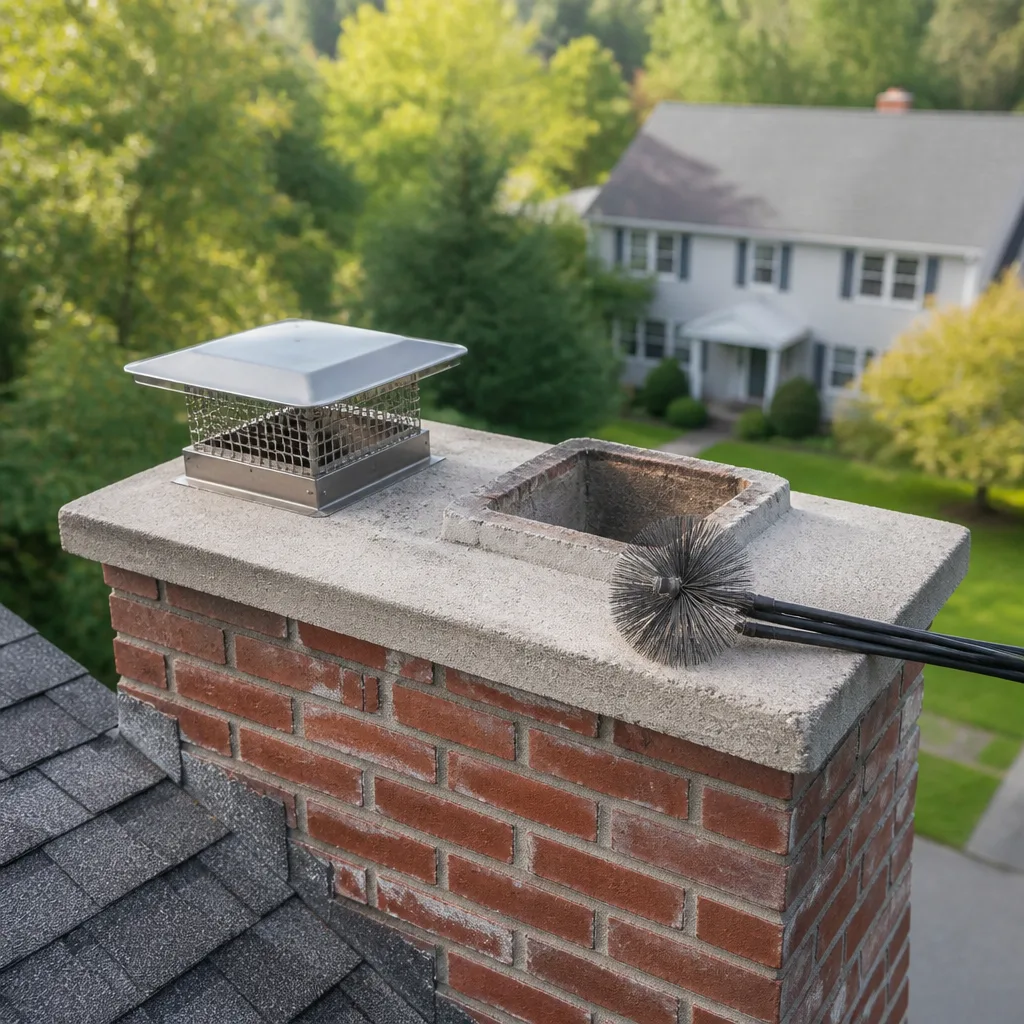
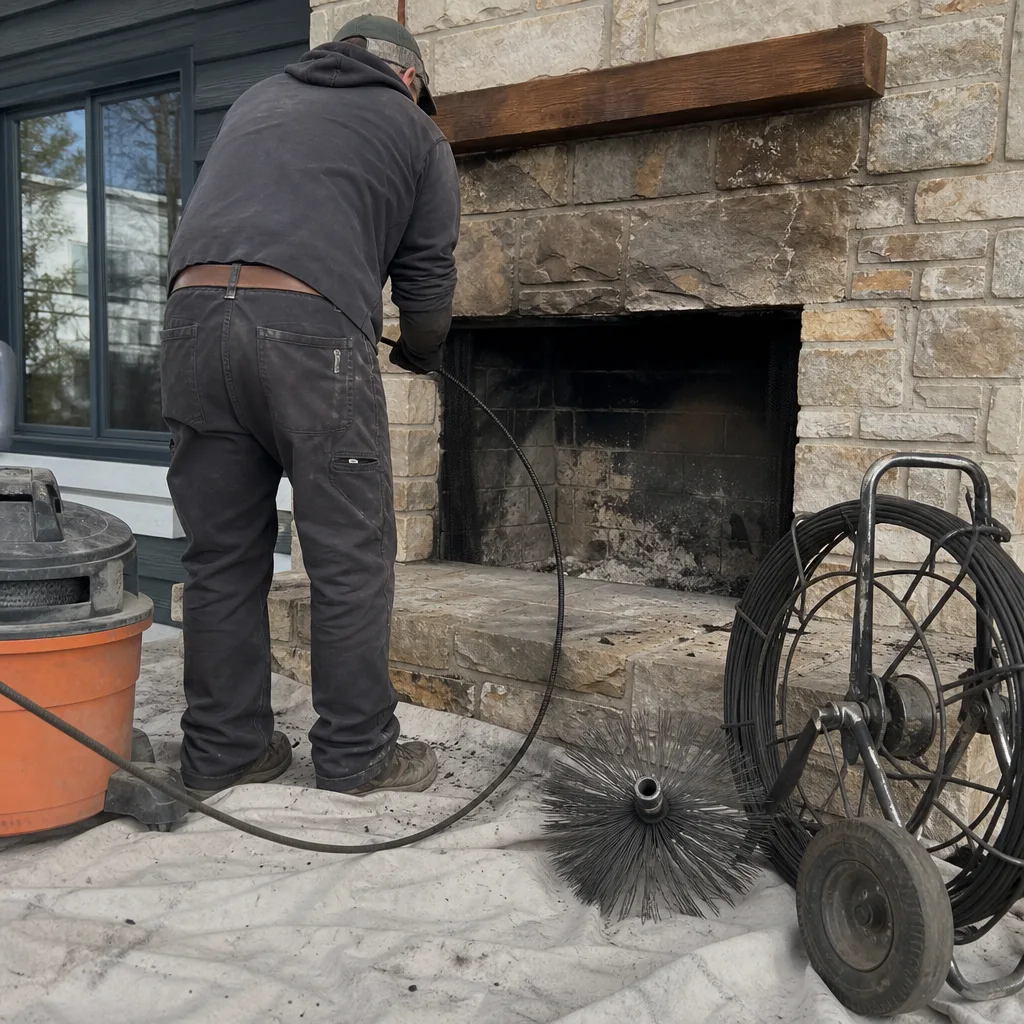
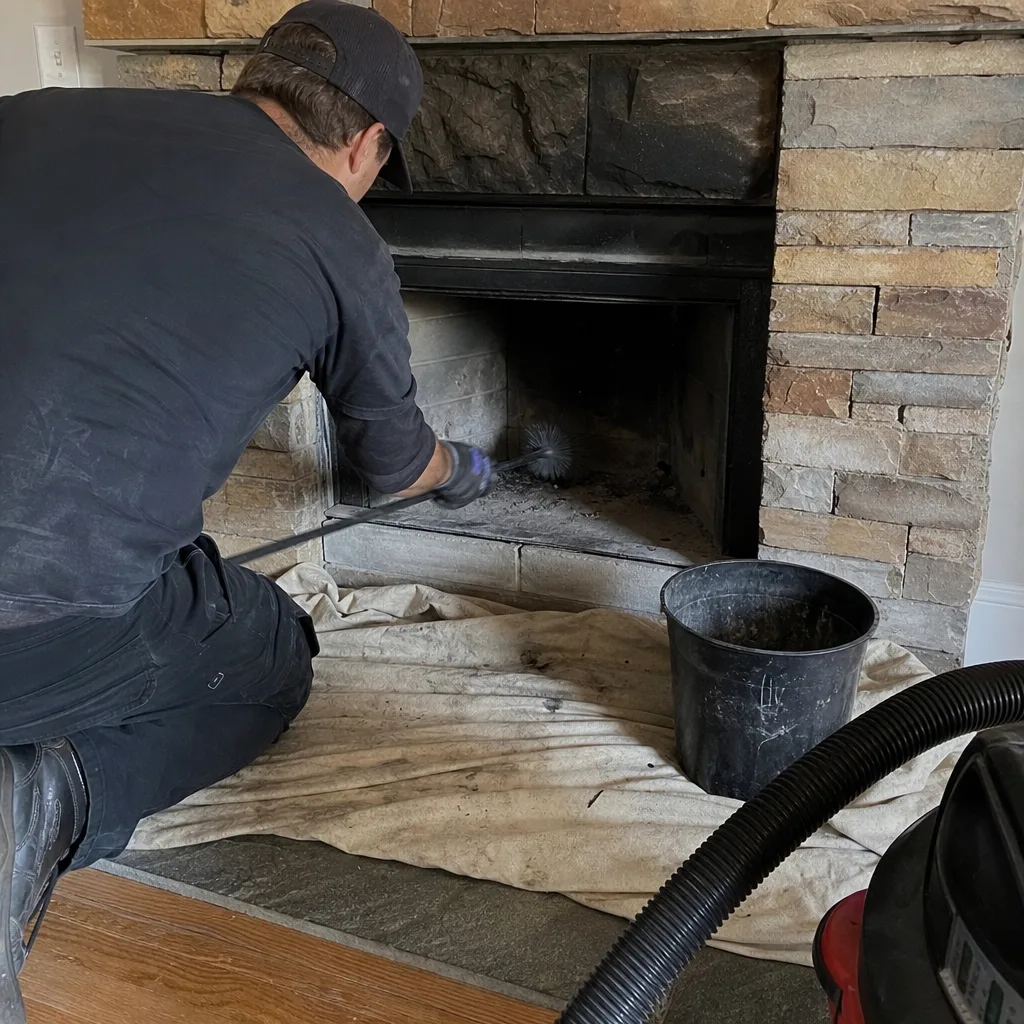
Chimney sweep logs do not sweep chimneys. They loosen some creosote - which then falls where a brush and vacuum still have to collect it.
 Before
 After
After Before
 After
After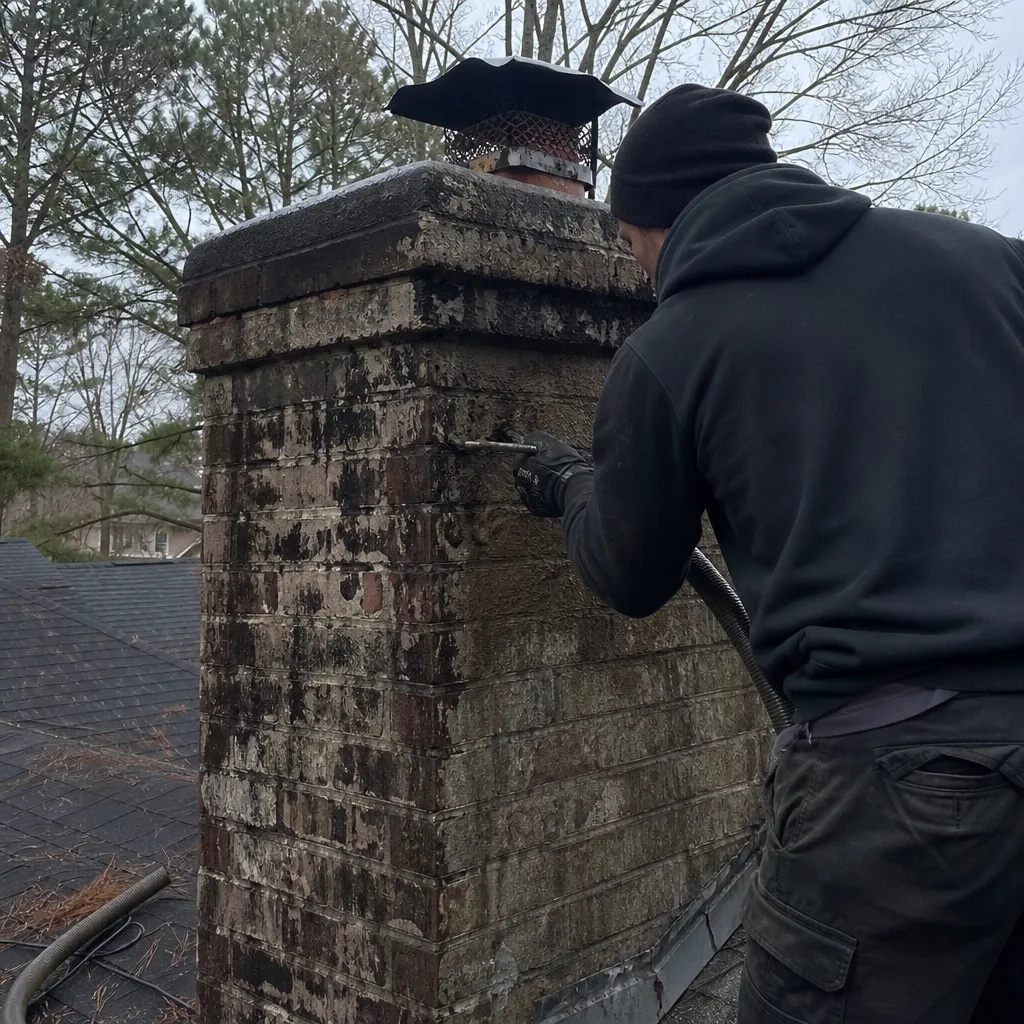 Before
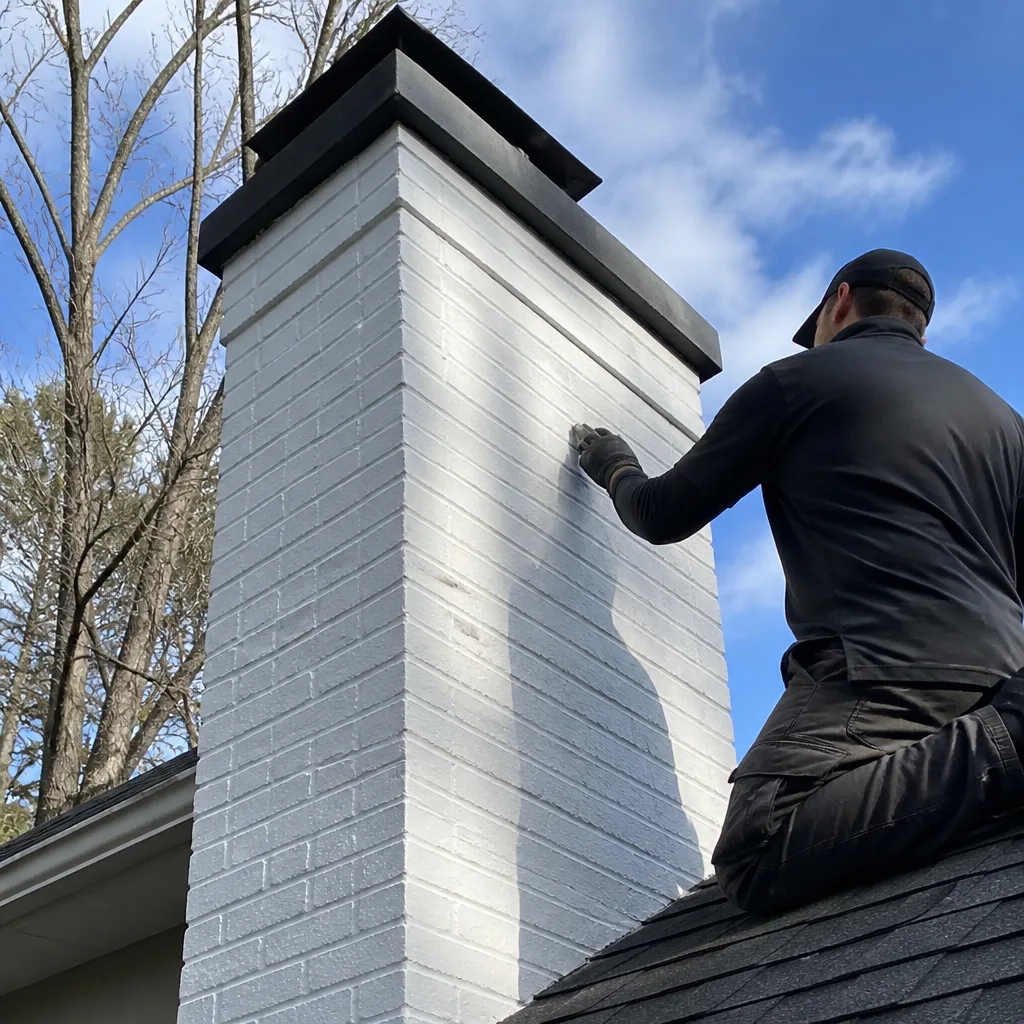 After
AfterSeasonal Chimney Cleaning Care for Atlanta: Year-Round Homeowner’s Guide
Atlanta homeowners who schedule one chimney cleaning in October are following the right playbook for northern states, but they’re skipping the three other damage windows that hit harder here. Our 38,000+ inspections since 2009 show that 60% of liner damage in Atlanta starts with crown sealant failure during summer humidity, not winter burning. The heavy oak and pine canopy across neighborhoods like Buckhead, Decatur, and Sandy Springs loads flues with debris that has nothing to do with creosote. And Atlanta’s freeze-thaw cycle, brief as it seems, cracks saturated mortar enough times each winter to matter. This guide maps what actually happens to your chimney each season, what evidence to look for, and when to act, with more guides & resources available for Atlanta homeowners.
Quick Answer
Atlanta chimneys need attention four times per year, not one: a summer moisture inspection for crown and mortar damage, a pre-burn fall cleaning for debris and creosote, a mid-winter check for heavy users showing Stage 2 creosote buildup, and a spring freeze-thaw assessment before summer rain exploits cracks. A single October sweep misses the summer moisture window that causes most liner damage here and the spring mortar cracks that let water in for six months.
Table of Contents
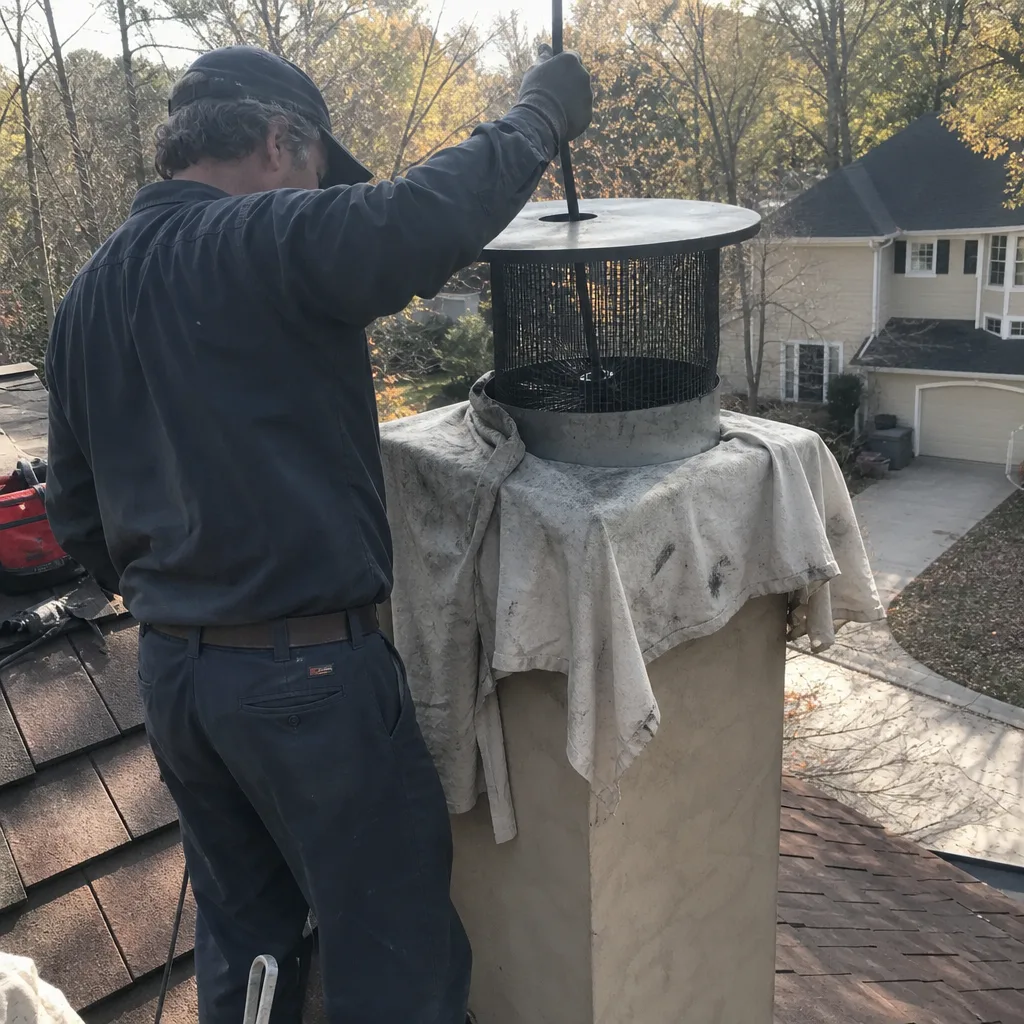
- Summer: The Hidden Damage Season in Atlanta
- Fall: Debris Loading From Oak and Pine Canopy
- Winter: Combustion Deposits and Burn Habits
- Spring: Freeze-Thaw Mortar Assessment
- Your Atlanta Chimney Seasonal Calendar
- What Seasonal Chimney Care Costs in Atlanta
- Common Mistakes to Avoid
- When to Call a Professional
- Frequently Asked Questions
BeforeAfterSummer: The Hidden Damage Season in Atlanta
July in Atlanta averages 78% relative humidity. That moisture doesn’t stay outside. It seeps into mortar joints, saturates porous brick, and attacks the crown sealant that keeps water from running down your flue liner.
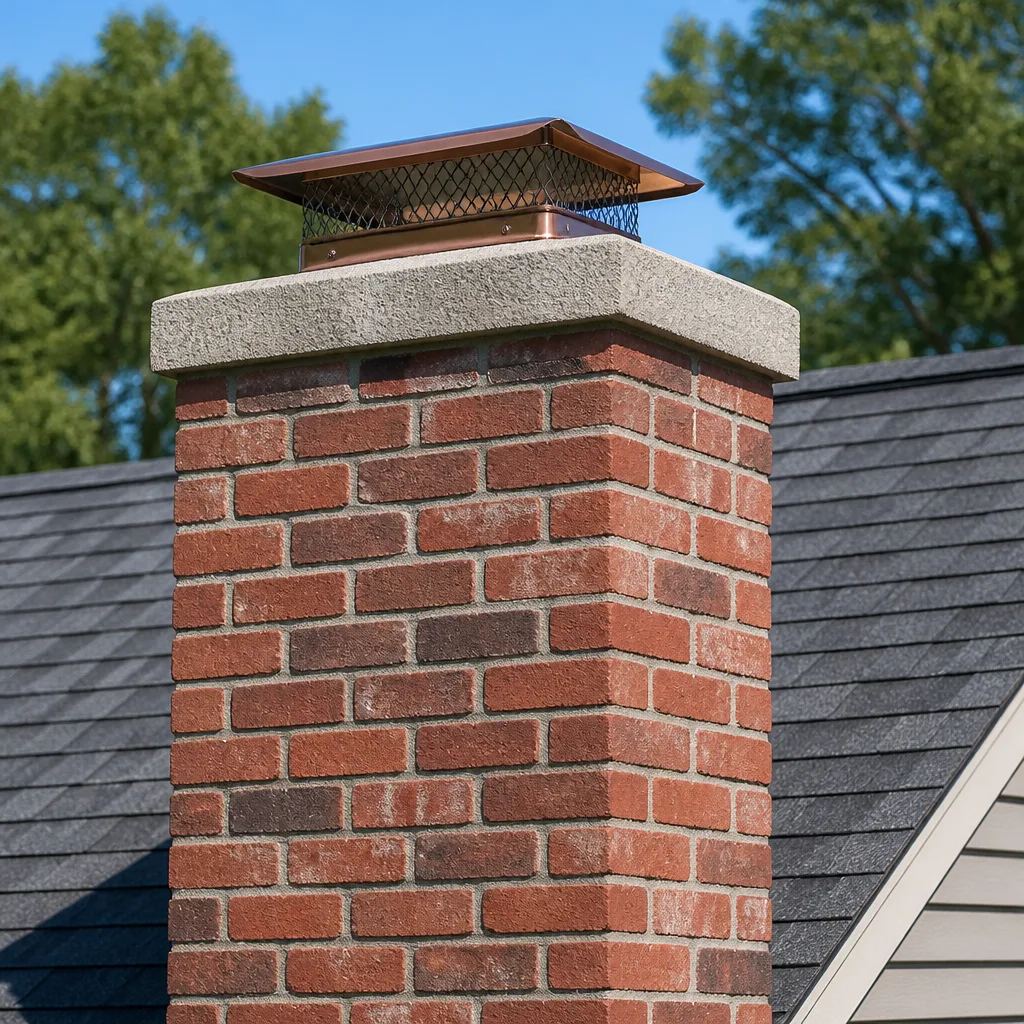
We see this pattern repeatedly in inspections across Virginia-Highland, Inman Park, and the older brick homes near the BeltLine. The crown, that concrete cap at the top of your chimney, is coated with sealant to shed water. After three to five Atlanta summers, that sealant develops hairline cracks from thermal expansion. Humidity enters, the concrete swells, and by October the crown has micro-fractures that direct water straight onto the flue liner.
Here’s what a mid-summer walk-around inspection covers:
- Crown surface check: We look for alligatoring (fine surface cracking), discoloration from water pooling, and missing sealant at the edges. These are visible from the roof or with a pole camera.
- Flashing inspection: The metal where chimney meets roof expands and contracts with Atlanta’s 40-degree summer day-night temperature swings. Lifted flashing corners are entry points for the afternoon thunderstorms that hit from June through September.
- Mortar joint survey: We probe joints between bricks for powdering or receding mortar. In Grant Park and Cabbagetown, where many chimneys date to the 1920s, we find joints eroded to half their original depth by late August.
- Interior humidity signs: Musty odor from the firebox, rust on the damper, or white efflorescence on the firebox walls all indicate moisture is already inside the system.
The critical finding we document: crown sealant failure is repairable for $400-$800 in summer. Left until October, water reaches the liner and you’re looking at chimney repair in Atlanta running $2,500-$5,000 for liner replacement. We write that price on the estimate before any work starts, per Clause 1 of the Haven Standard.
Summer is also when we perform Level 2 camera inspections for home sales. Atlanta’s real estate market peaks in May and June. Buyers who request a camera-scan inspection, Clause 4 of the Haven Standard, receive a documented photo record they can attach to their closing file. We’ve completed thousands of these since 2009.
Fall: Debris Loading From Oak and Pine Canopy
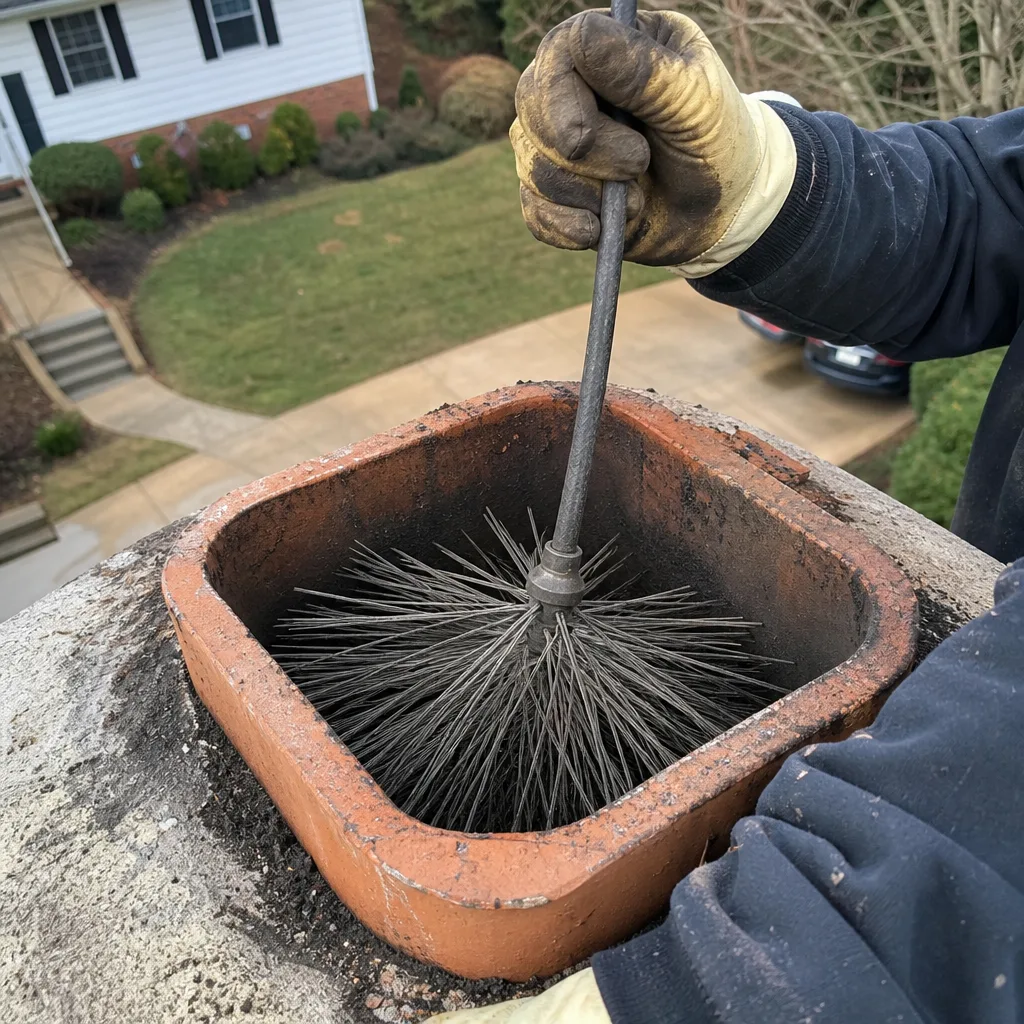
Atlanta’s tree canopy is the densest of any major U.S. city. That’s not a landscaping feature when you’re talking about chimney function. From September through November, oak leaves, pine needles, and helicopter seeds descend in volumes that surprise homeowners who’ve never looked up their flue.
This debris creates a separate blockage problem from creosote. Creosote is a combustion deposit. Debris is a physical obstruction. They require different removal methods, and debris loading happens whether you burned last winter or not.
In neighborhoods like Druid Hills, Ansley Park, and the pine-heavy lots of North Druid Hills, we regularly find flues with six to twelve inches of packed organic material by late October. This material:
- Restricts draft, causing smoke to back up into the room on first fire
- Holds moisture against the flue liner, accelerating corrosion
- Provides fuel for chimney fires if ignited by stray sparks
- Blocks the path for our inspection camera, preventing a complete Level 2 scan
A proper fall cleaning for Atlanta homes includes two distinct tasks: debris removal with a rotary brush system sized to the flue diameter, and creosote evaluation with a visual and camera inspection. We classify creosote by stage: Stage 1 is sooty and brushes off; Stage 2 is shiny and tar-like, requiring a more aggressive removal method; Stage 3 is glazed and hardened, often requiring chemical treatment or mechanical removal.
The chimney cleaning and sweep in Atlanta that most homeowners need before first burn is not a quick brush-out. It’s a documented clearing of both debris and creosote, with photo evidence of the flue condition before you light the first log. Our 365-Day Done Right Promise covers this work: if draft problems persist after our cleaning, we return and make it right.
Timing matters. We recommend scheduling before October 15, when Atlanta’s first consistent cold fronts arrive. After that date, our live phone lines stay busy and the wait stretches. Not because we’re scarce, but because the entire city remembers their chimney on the same 45-degree evening.
Winter: Combustion Deposits and Burn Habits
Atlanta winters are mild compared to Chicago or Boston. That’s the problem. Our average January low is 34 degrees. Homeowners build short, low-heat fires to take the chill off for two hours, then let the fire die. This burn pattern produces Stage 2 creosote faster than the long, hot burns recommended in colder climates.
Here’s why: complete combustion requires sustained high temperatures. A fire that never reaches 600 degrees Fahrenheit leaves unburned hydrocarbons that condense on the cooler upper flue walls as liquid creosote. That liquid dries to a shiny, tar-like Stage 2 deposit that traps more material with each fire. In our inspections of Midtown condos and East Atlanta bungalows, we find Stage 2 buildup after as few as 30 low-heat fires.
The risk isn’t theoretical. Stage 2 creosote ignites at approximately 1,000 degrees, a temperature reached easily in a chimney fire. Atlanta Fire Rescue responds to dozens of chimney fires each winter, most in January when buildup from November and December reaches critical mass.
For heavier users, we recommend a mid-season check. This is not a full cleaning. It’s a camera inspection, typically scheduled in January, that evaluates:
- Creosote stage progression since fall cleaning
- Damper operation (thermal cycling can warp metal dampers)
- Smoke chamber and firebox condition after two months of thermal stress
- Cap and screen integrity (wind storms in December and January dislodge screens)
We document findings with photos, provide a written scope and price if additional cleaning is needed, and schedule before the late-February cold snap that often produces the heaviest usage. Materials for any repair, from Gelco caps to Olympia Chimney liner components, are procured through our Haven buying network to keep pricing honest and compliant with Chimney Cleaning Permits, Codes & Inspections in GA: What You Need to Know.
The fireplace services in Atlanta we provide during winter focus on safe operation, not just cleaning. We check for proper grate placement, verify the hearth extension meets code, and confirm the damper seals when closed to prevent heated air loss on nights you’re not burning.
Spring: Freeze-Thaw Mortar Assessment
Atlanta averages 36 nights below freezing annually. That doesn’t sound like frost-heave country, but chimney mortar doesn’t need sustained cold to fail. It needs saturated mortar and one freeze cycle.
The mechanism is simple: water enters a hairline mortar crack during rain. Temperature drops to 28 degrees overnight. Water expands 9% as it freezes, widening the crack. Sun hits the chimney next morning, ice melts, more water enters the larger opening. Repeat three times in a typical Atlanta winter, and a hairline crack is a quarter-inch gap by March.
Spring is the inspection window for this damage, before summer rain exploits it for six straight months. We focus on:
- Exterior mortar joints: We probe with a joint raker to find powdering, receding, or missing mortar. Sound mortar resists the tool; failed mortar crumbles.
- Crown condition after winter: Freeze-thaw on the crown produces vertical cracks that channel water directly to the flue. These differ from summer alligatoring, they’re single, deep fissures.
- Flashing seal integrity: Winter thermal cycling separates flashing from roofing material. Spring rains test these separations immediately.
- Interior water staining: We inspect the attic space around the chimney chase for stains that appeared during winter rains but weren’t visible until the roof dried in spring.
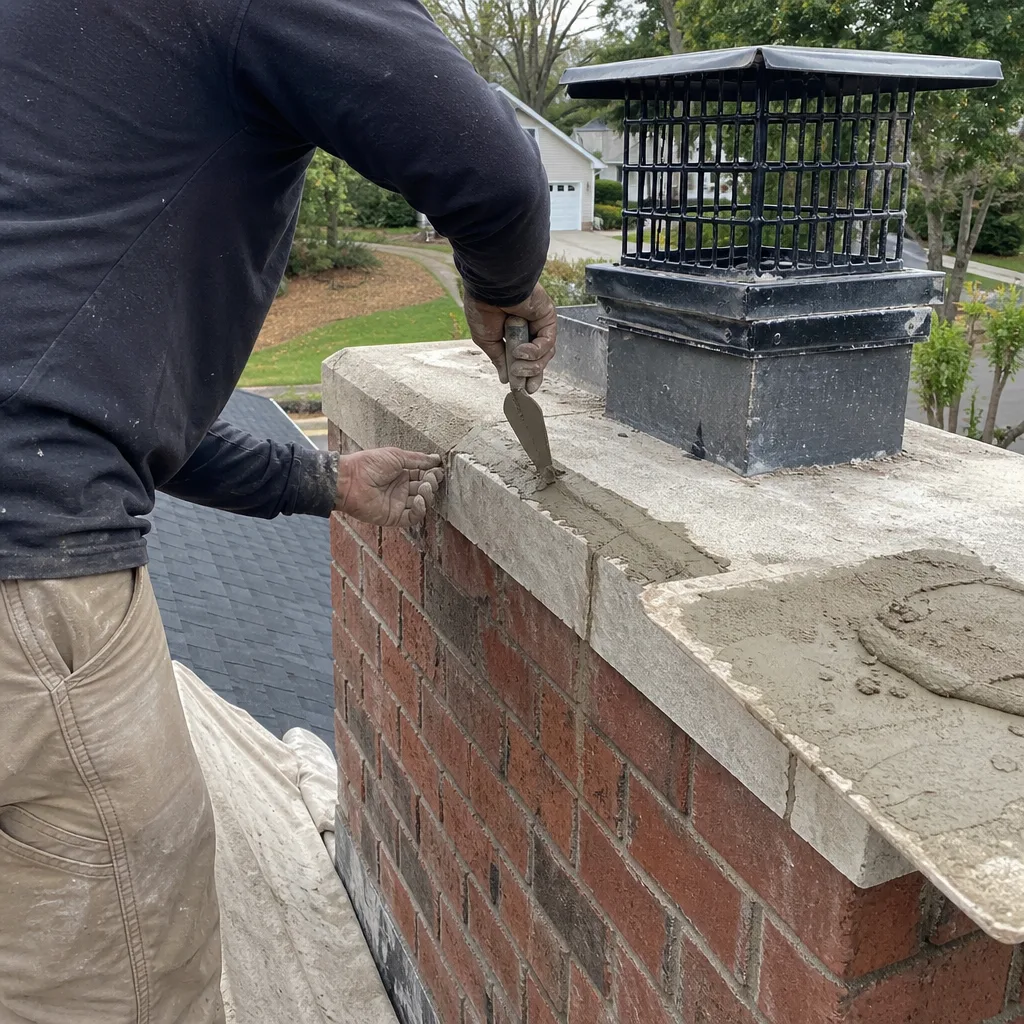
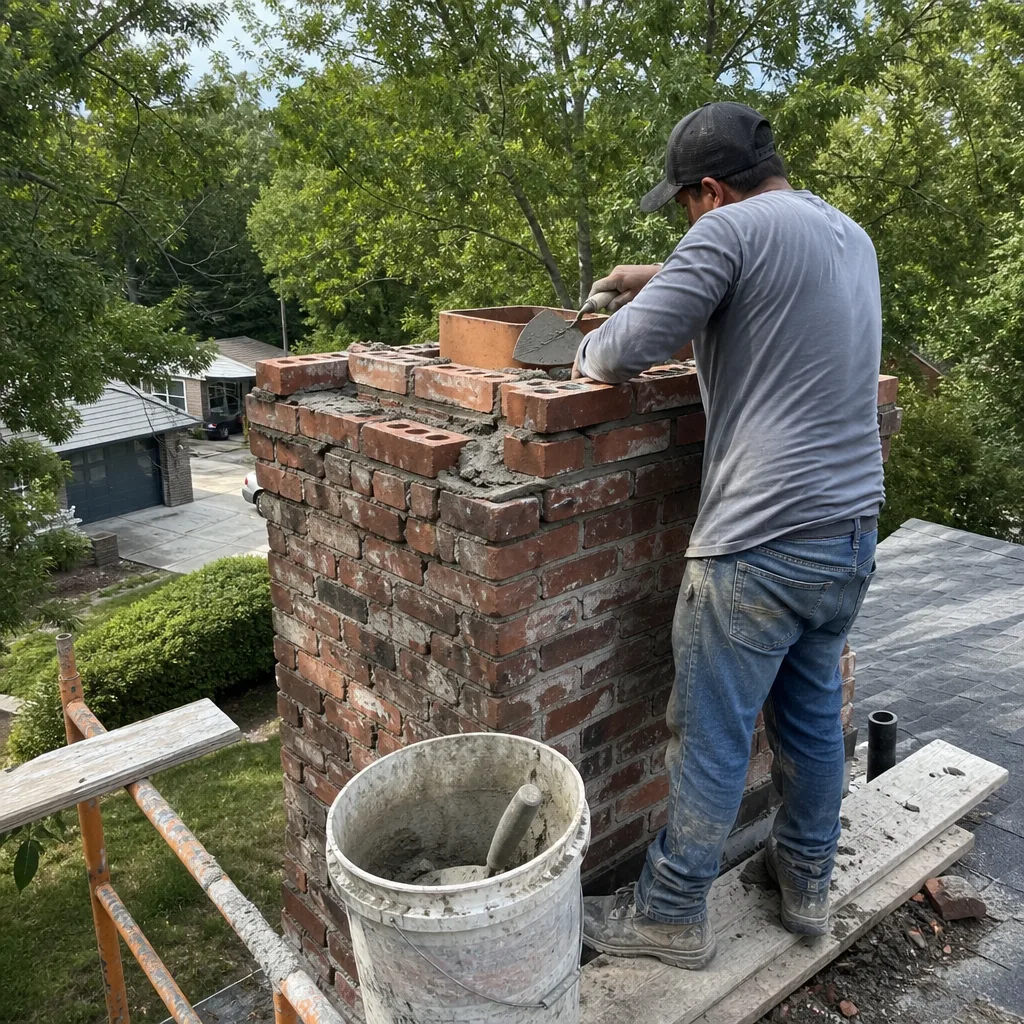
In Kirkwood and Edgewood, where 1940s brick chimneys are common, we find freeze-thaw damage in roughly 40% of spring inspections. The repair is tuckpointing, selective mortar replacement, typically $800-$1,800 depending on access and extent. Left through summer, water intrusion causes spalling, brick face popping off in sheets, and repair costs triple.
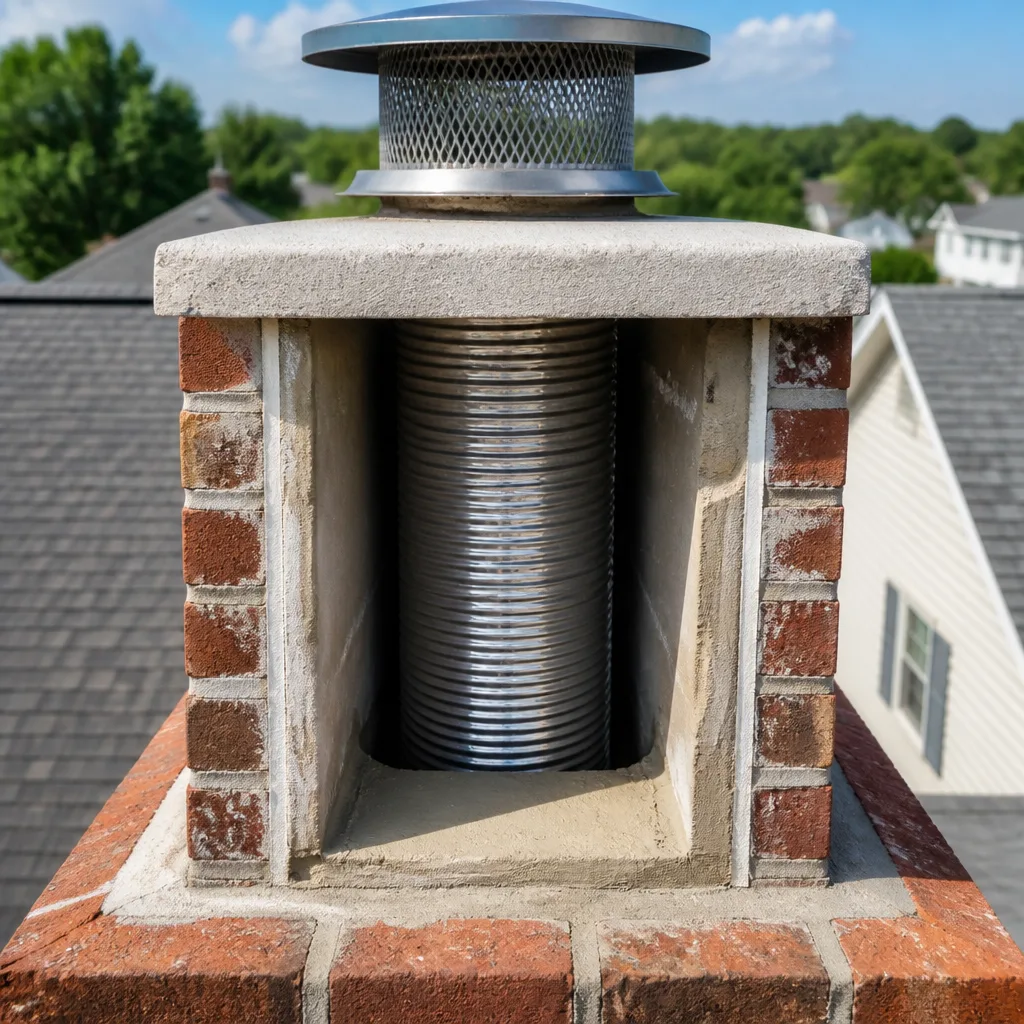
Spring is also when we schedule liner inspections for gas inserts and fireplaces that ran all winter. Corrugated flexible liners, common in Atlanta retrofits, develop condensation corrosion at the collar connection. A camera scan finds it before the liner fails and CO enters the living space.
Your Atlanta Chimney Seasonal Calendar
This calendar maps each care task to the evidence that triggers it, not just a month. Atlanta’s weather varies year to year. The evidence is more reliable than the date.
| Season | Evidence to Watch For | Action Required | Typical Cost Range in Atlanta |
|---|---|---|---|
| Summer (June-August) | Crown discoloration, musty firebox odor, efflorescence on bricks, visible flashing gaps | Moisture inspection with camera scan; crown sealant repair if needed | Inspection: $250-$350; Crown repair: $400-$800 |
| Fall (September-November) | Debris visible from cleanout, draft smell when damper is closed, last cleaning was 12+ months ago | Full sweep with debris removal, creosote classification, camera documentation | Sweep with Level 2 inspection: $300-$450 |
| Winter (December-February) | Smoke backup on startup, slower draft than previous year, 30+ fires since fall cleaning | Mid-season camera check; Stage 2 creosote removal if present | Camera check: $200-$275; Stage 2 removal: $400-$650 |
| Spring (March-May) | Visible mortar gaps, brick spalling, new attic stains, crown cracks after freeze events | Freeze-thaw damage assessment; tuckpointing or crown rebuild if needed | Assessment: $250-$350; Tuckpointing: $800-$1,800 |
Heavy users, defined as more than four fires weekly during winter, should add the mid-winter camera check. Occasional users, fewer than ten fires per season, can often skip mid-winter but should not skip summer moisture inspection. The moisture damage happens whether you burn or not.
What Seasonal Chimney Care Costs in Atlanta
Atlanta’s chimney service market ranges from $99 “sweep specials” to $600+ for documented Level 2 inspections; see our Chimney Cleaning Cost Breakdown: The Atlanta Homeowner’s Reference for 2026 for full pricing context. The difference is what you receive and what protects you if something goes wrong.
A $99 special typically includes a flashlight look and a brush run. It does not include camera documentation, written scope, or warranty. If the technician finds damage, you have no photo record for your insurer or the next buyer of your home. The Level Two Chimney Atlanta home page details our full inspection standard.
Our pricing for seasonal care in Atlanta neighborhoods from Buckhead to Decatur to Sandy Springs:
- Level 2 inspection with camera scan and photo record: $250-$350. Clause 4 of the Haven Standard requires this documentation on every job. You receive dated photos of flue condition, crown, damper, and smoke chamber.
- Chimney sweep with Level 2 inspection: $300-$450. Includes debris removal, creosote classification, and full photo documentation.
- Stage 2 creosote removal: $400-$650. Requires rotary chains or chemical treatment, with before-and-after camera proof.
- Crown sealant repair: $400-$800. Uses flexible crown coat rated for Georgia UV exposure and thermal cycling.
- Tuckpointing (per section): $800-$1,800. Includes mortar matching, joint profiling, and water repellent application.
- Cap replacement (Gelco or Famco): $350-$650. Includes proper sizing for your flue count and spark arrestor mesh.
Every price is written before work starts, with scope and warranty documented. No exceptions. Our Free Second Opinion on any written estimate means you can bring us a competitor’s quote and we’ll review it against what we find, at no charge.
Materials matter for longevity. We source from DuraFlex, HeatShield, Gelco, Olympia Chimney, Famco, and Copperfield through our Haven buying network. These are not retail-grade products. They’re trade-specified for the thermal and moisture stress of Atlanta’s climate.
Common Mistakes to Avoid
- Scheduling only in October. You’re cleaning for winter but missing the summer moisture damage that already compromised your liner. By October, crown cracks have been directing water downward for four months.
- Assuming no burn means no maintenance. Gas fireplaces produce condensation corrosion. Unused chimneys collect debris and become animal entry points. We’ve found squirrel nests blocking flues in April that the homeowner never knew about.
- Hiring based on lowest price without asking about documentation. A sweep without camera proof is unverifiable. If your insurer or home buyer asks for evidence of maintenance, you have nothing. We stamp every job with a documented photo record under Clause 4.
- Ignoring musty odors in summer. That smell is moisture in the system, not “old fireplace.” It’s evidence of active water intrusion that will degrade mortar and liner through the humid season.
- Building low, smoldering fires for “atmosphere.” These produce Stage 2 creosote fastest. If you want atmosphere without buildup, use properly seasoned hardwood (20% moisture or less) and maintain active flame, not glowing embers.
- Skipping spring inspection after a mild winter. Atlanta’s freeze-thaw damage happens in brief cold snaps, not sustained cold. One night at 25 degrees with saturated mortar is enough. Spring is when you find it before summer rain makes it worse.
- Accepting verbal estimates. Clause 1 of the Haven Standard exists because we’ve seen too many homeowners surprised by bills 40% higher than the phone quote. Written price, written scope, written warranty, before any work starts.
When to Call a Professional
Call when you see evidence, not when you smell smoke in the room. By then, the problem is urgent and expensive.
Specific scenarios: visible mortar gaps or spalling bricks on the exterior; water stains on the ceiling near the chimney chase; smoke backing up on fire startup even with damper open; a musty or sharp odor from the firebox in summer; rust on the damper or firebox components; debris visible when you open the cleanout door; it’s been 18+ months since your last documented camera inspection.
Level Two Chimney Atlanta offers free estimates in Atlanta. Call (470) 435-7984. A live person answers, 24 hours a day. We’ll schedule a Level 2 camera inspection, provide a written price before any work starts, and leave you with a documented photo record under Clause 4 of the Haven Standard. Corrine Halstead and our team have completed more than 38,000 inspections and cleanings since 2009, every one with that same documentation standard.
Frequently Asked Questions
A proper chimney sweep with Level 2 camera inspection in Atlanta costs $300-$450. The $99 specials skip the camera documentation, written scope, and warranty that protect you if damage is found or if you need proof for insurance. Call (470) 435-7984 for an exact quote on your system - estimates are free.
At minimum, once per year before first burn, with a summer moisture inspection every other year. Heavy users, more than four fires weekly, need a mid-winter camera check. Homes under heavy tree canopy, common in Druid Hills, Ansley Park, and North Druid Hills, benefit from debris assessment each fall even if you burned little the previous winter. Call (470) 435-7984 to discuss your usage pattern.
Not unless camera evidence shows cracks, gaps, or deterioration that compromises containment of heat and combustion gases. We recommend nothing without photo documentation you can see for yourself. Many liners have decades of service left. Some clay liners in 1960s Atlanta homes show hairline cracking that we monitor rather than replace. The written scope we provide before any work starts specifies exactly what the camera found and why replacement is or isn’t warranted.
Three outcomes, in order of likelihood: moisture damage to liner and surrounding structure, costing $2,500-$8,000 to repair; chimney fire from creosote ignition, potentially spreading to roof or framing; carbon monoxide intrusion from liner failure or blockages, which can be fatal. The first is most common and most preventable with summer inspection. The last is least common and most serious. All three are documented risks we assess with camera evidence, not speculation.
Humidity saturates mortar and crown sealant, then thermal expansion from 90-degree days and 70-degree nights creates micro-cracking. In winter, that saturated mortar freezes and expands. Atlanta’s 78% average summer humidity is higher than Phoenix’s annual average. It accelerates crown sealant failure and mortar erosion compared to drier climates. Summer inspection catches this before October rain and winter freeze exploit it.
You can perform a ground-level visual check for obvious crown cracks, missing cap, or damaged flashing. You cannot safely evaluate flue condition, creosote stage, or internal moisture damage without a camera system and training. Chimney work involves heights, confined spaces, and combustion safety assessment. For documented evaluation, a Level 2 inspection by a certified technician is the NFPA 211 standard. We include this as standard practice, not an upsell.
The Bottom Line
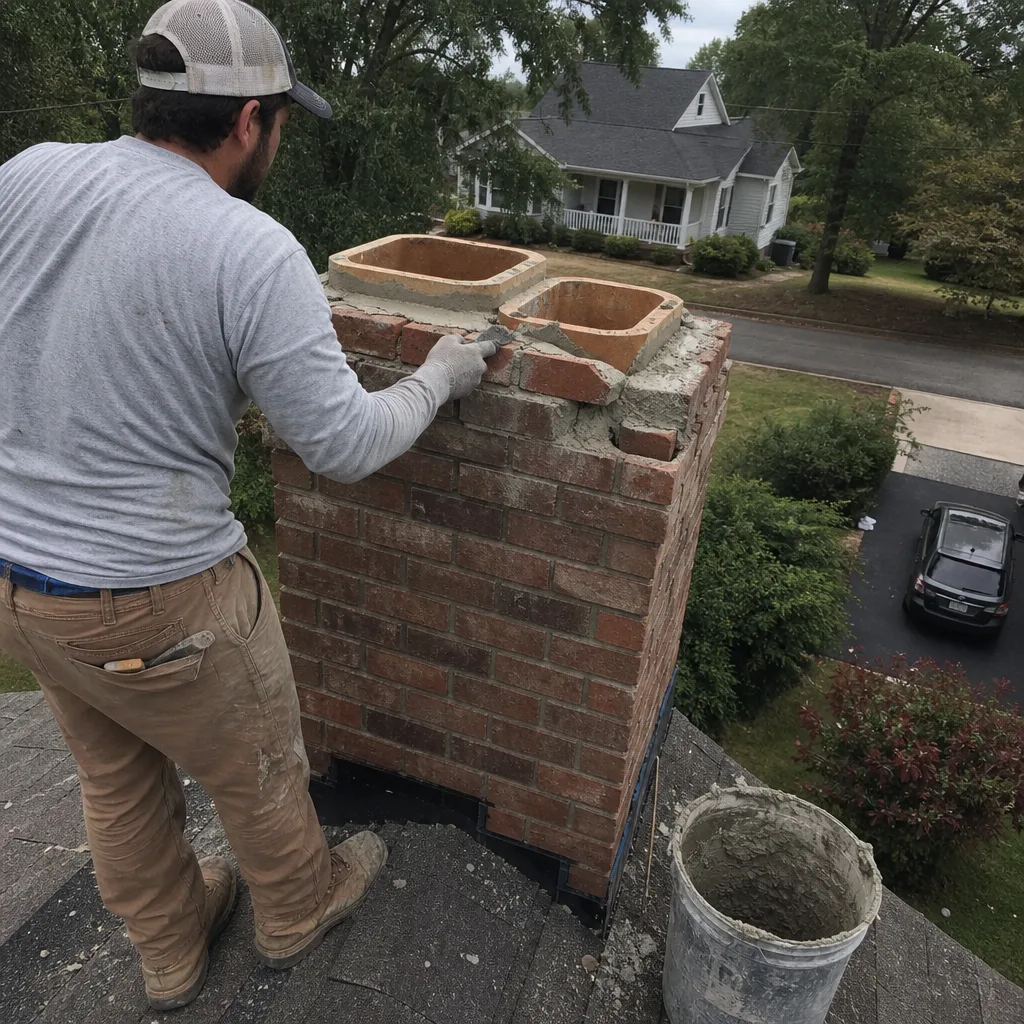
Atlanta’s four-season climate creates four distinct chimney damage windows. A single October cleaning addresses only one. Summer moisture inspection prevents the crown failure that causes 60% of liner damage here. Fall debris clearing handles the oak and pine loading that blocks flues independent of creosote. Winter mid-season checks catch Stage 2 buildup from our region’s short-fire habit. Spring freeze-thaw assessment finds mortar cracks before six months of summer rain.
The evidence triggers the action, not the calendar. Watch for crown discoloration, musty odors, visible mortar gaps, and smoke backup. Document what you find, or hire a technician who will document it for you with dated photos and a written record.
Level Two Chimney Atlanta has operated under the Haven Standard since 2009. Every one of our 38,000+ jobs has included a written price before work started and a documented photo record on completion. The 365-Day Done Right Promise means if it’s not right, we make it right. Background-checked, uniformed technicians. Live phone support, 24 hours a day. Free Second Opinion on any written estimate.
Call (470) 435-7984 for a free estimate. A live person will answer.
Written by Corrine Halstead, Owner at Level Two Chimney Atlanta, serving Atlanta since 2009.